
A humble fabric before it became a Chanel signature
In the early twentieth century, jersey did not belong to the most prestigious register of couture. The Metropolitan Museum of Art notes its association with menswear and underwear. Gabrielle Chanel’s decision is striking because she did not begin with a material already coded as luxury. She changed its destination. The innovation lay less in inventing the fabric than in making a different social and aesthetic argument with it.
Deauville in 1913: sportswear as a laboratory
CHANEL’s official history places jersey sportswear in the Deauville boutique from 1913. A seaside resort encouraged a different relationship with clothing: walking, fresh air and movement called for less ceremonial silhouettes. Chanel read that environment and offered clothes suited to it. The shift should not be reduced to a single heroic breakthrough; jersey participated in broader changes, but she used it with unusual consistency.
War changed both resources and use
During the First World War, conventional fabrics and specialist labor became harder to secure. The Met emphasizes jersey’s low cost in Chanel’s early work. Material constraint does not explain the whole design philosophy, but it matters. Her entrepreneurial achievement was to read what was available and turn it into a desirable proposition rather than conceal its modest origin.
Drape allowed clothing to move with the body
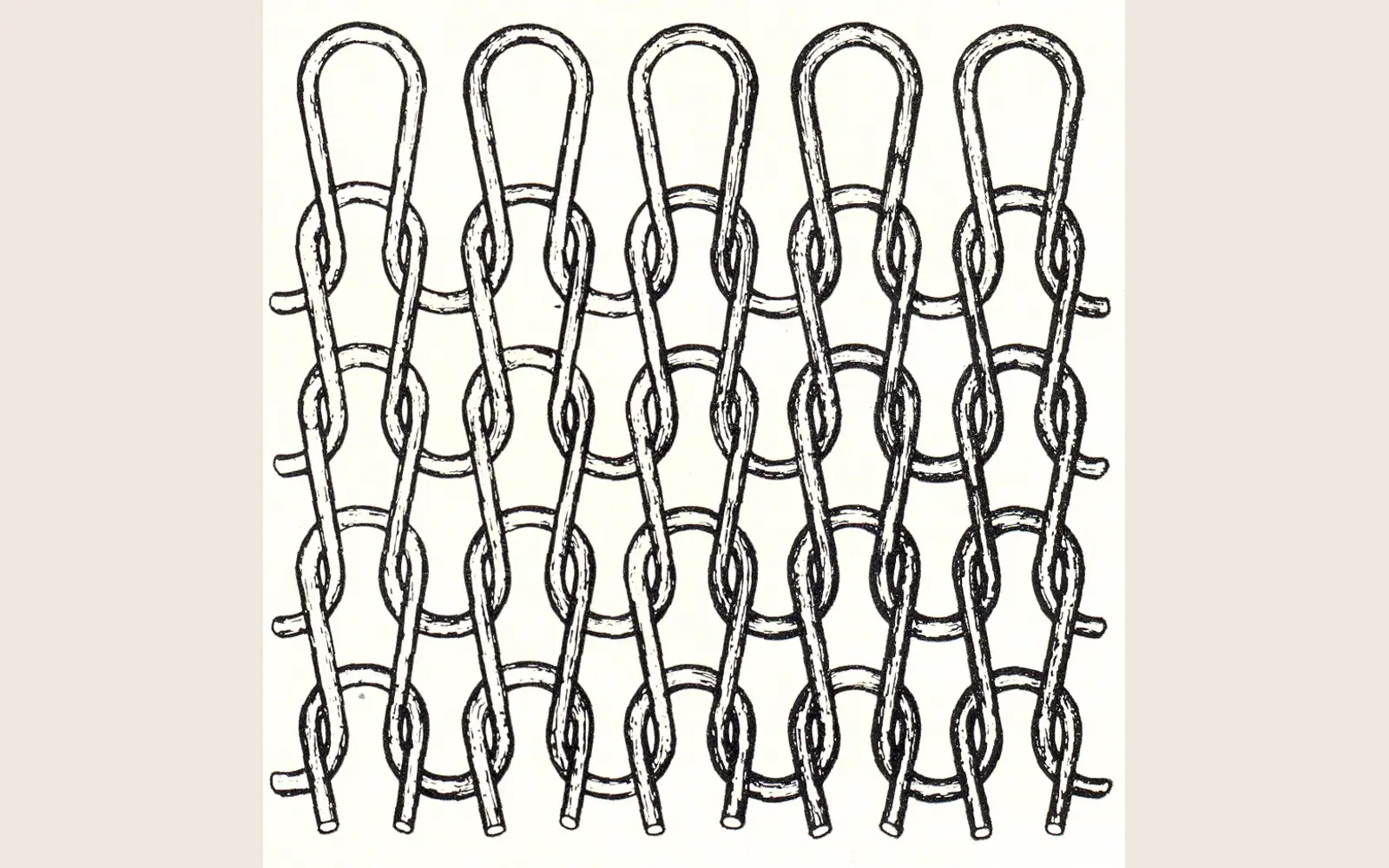
Jersey is knitted from interconnected loops, giving it stretch and a supple fall. It can follow movement without some of the rigid structures demanded by earlier silhouettes. Chanel used that quality in clean forms partly informed by menswear. Saying that jersey “liberated” fashion should not suggest that one textile emancipated every woman. It identifies a concrete change in the relationship among garment, movement and daily life.
Simplicity requires exact control
A restrained garment is not necessarily easy to design. With less ornament, cut, proportion, finishing and the behavior of the fabric become more visible. Jersey can distort or expose an imprecise line. Chanel’s success therefore depended on technical alignment between material and silhouette. The same paradox shapes the making of Chanel icons: apparent inevitability is the result of disciplined decisions.
Material became part of the house vocabulary
Repeated across cardigans, suits and dresses, jersey came to suggest ease, clarity and a dialogue with menswear. Like the camellia, it could communicate identity without operating as a conventional logo. The Chanel camellia reveals a related mechanism: repetition and variation turn an element into a durable cultural sign.
From the resort to Rue Cambon
The use of jersey predates the full expansion of the Paris house and helps explain its coherence. Deauville served as a laboratory for lifestyle; Paris organized creation, presentation and reputation. Rue Cambon’s role in the Chanel story gives that development a physical geography. The story is not about a cheap textile suddenly becoming precious, but an idea gaining visibility through places, clients and consistent use.
B2B guidance: make innovation visible through structure
For fashion- or leadership-focused clients, begin with the fabric diagram: a system of loops rather than a decorative surface. Ask what that construction permits the body to do. The material detail opens a wider conversation about resourcefulness, reading context and building identity. The Elyrea Coco Chanel Encounter can extend those questions, subject to separately confirmed availability.
FOR YOUR GUEST ITINERARIES
With Elyrea, trace how Coco Chanel turned a material constraint into an enduring expression of modernity.
Discuss your itinerary