
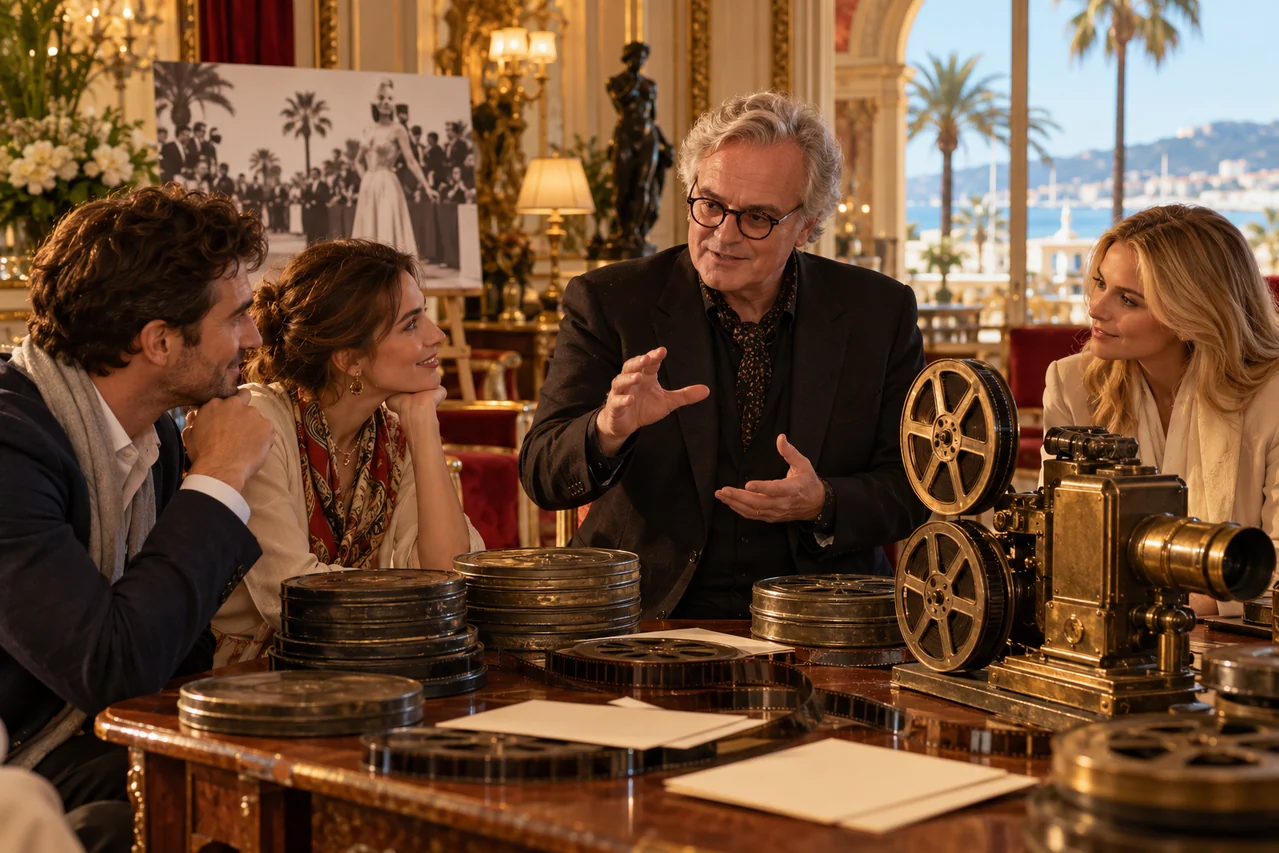
Cinema already carried international cultural power
By the 1930s, cinema was a major cultural industry, and festivals offered a place where artistic recognition and national representation could meet. Prizes were not detached from the political environments in which they were awarded. The Venice festival, established in 1932, provided an important reference point, but growing concerns about Fascist influence made the question of independence increasingly consequential. This context explains why a rival international event could be understood as more than entertainment. Choosing where and how films were judged also concerned prestige and the public position of culture.
The French project proposed a different gathering
The ambition behind a festival in France included offering an international competition perceived as less subject to the political pressures associated with Venice. Art, diplomacy and national visibility were intertwined in that objective. A traveler who begins with this background can see beyond the assumption that Cannes arose naturally from seaside luxury. The later red carpet became a powerful image, but it does not explain the original need for another festival. The historical starting question was how cinema could be brought together and recognized within a different institutional and international setting.
Cannes supplied an established resort environment
The city's hotels, international reputation and capacity to host distinguished visitors made it suitable for the project. Those attributes grew from an earlier Riviera resort history. The destination was therefore part of the Festival's identity from the beginning, rather than a neutral location that could be ignored once films arrived. The Croisette's development as a cinema stage builds on this relationship. Understanding it connects tourism and cultural organization without suggesting that attractive surroundings alone were sufficient to create a world-leading film event.
The planned 1939 edition was overtaken by war
An opening edition was prepared for September 1939, but the invasion of Poland and the outbreak of the Second World War interrupted the project. The important distinction is between that planned beginning and the Festival that subsequently took place after the war. A smooth story in which Cannes simply started in 1939 hides the disruption that changed Europe. The interruption is itself historically revealing: cultural ambition had been assembled just as the conditions necessary for international gathering were being shattered by conflict.
The first full edition took place in 1946
After the war, the Festival could finally develop as an organized international event. The first full edition in 1946 belonged to a setting of reconstruction and renewed cultural exchange. Bringing films and participants from different countries together carried significance beyond leisure. Cannes offered a meeting point in an altered world, with artistic competition and international representation remaining closely connected. This history makes the destination's identity more substantial: the event became famous for images of stars, yet its postwar beginning also concerned the rebuilding of relationships through culture.
Familiar traditions developed over time
Today's recognizable Festival was not established complete in its first edition. Awards, infrastructure and rituals changed. The Palme d'Or appeared in 1955, while the current Palais was inaugurated in 1983. These dates demonstrate that apparently timeless symbols have particular histories. The visitor can ask when a custom became recognizable and what made it durable. Cannes's Palais and red-carpet ritual show how buildings, ceremonies and media can reinforce one another, rather than assuming that every present feature belongs unchanged to the Festival's origin.
Glamour amplified the event without exhausting its purpose
Photography, television and fashion helped make Cannes legible to audiences who might never see a selected film. The waterfront, hotels, dresses and stairs supplied a visual language that traveled widely. This public image coexists with screenings, professional activity and international cinema rather than replacing them completely. An account of the origins makes that relationship easier to see. Glamour is a layer of the history, not the entire explanation. It can be appreciated while guests also understand artistic recognition, diplomacy and the practical circulation of films.
Make the founding question part of a cultural visit
Why does this event take place here, and why was it created at all? Those questions can organize a Cannes walk more effectively than starting with a list of celebrity-associated locations. Elyrea's fictional Quentin Tarantini offers a narrative entry into the city's codes within Cinéma, Strass & Scandales. He is distinct from Quentin Tarantino and does not supply a real filmmaker's biography or personal testimony. The character can animate the setting while the established chronology gives guests an intelligible route from interrupted ambition to a global cultural gathering.
FOR YOUR GUEST ITINERARIES
Creating a Riviera itinerary for culturally curious guests? Elyrea can help connect Cannes's Festival history with the fictional Quentin Tarantini Encounter and their wider interests.
Discuss your itinerary