
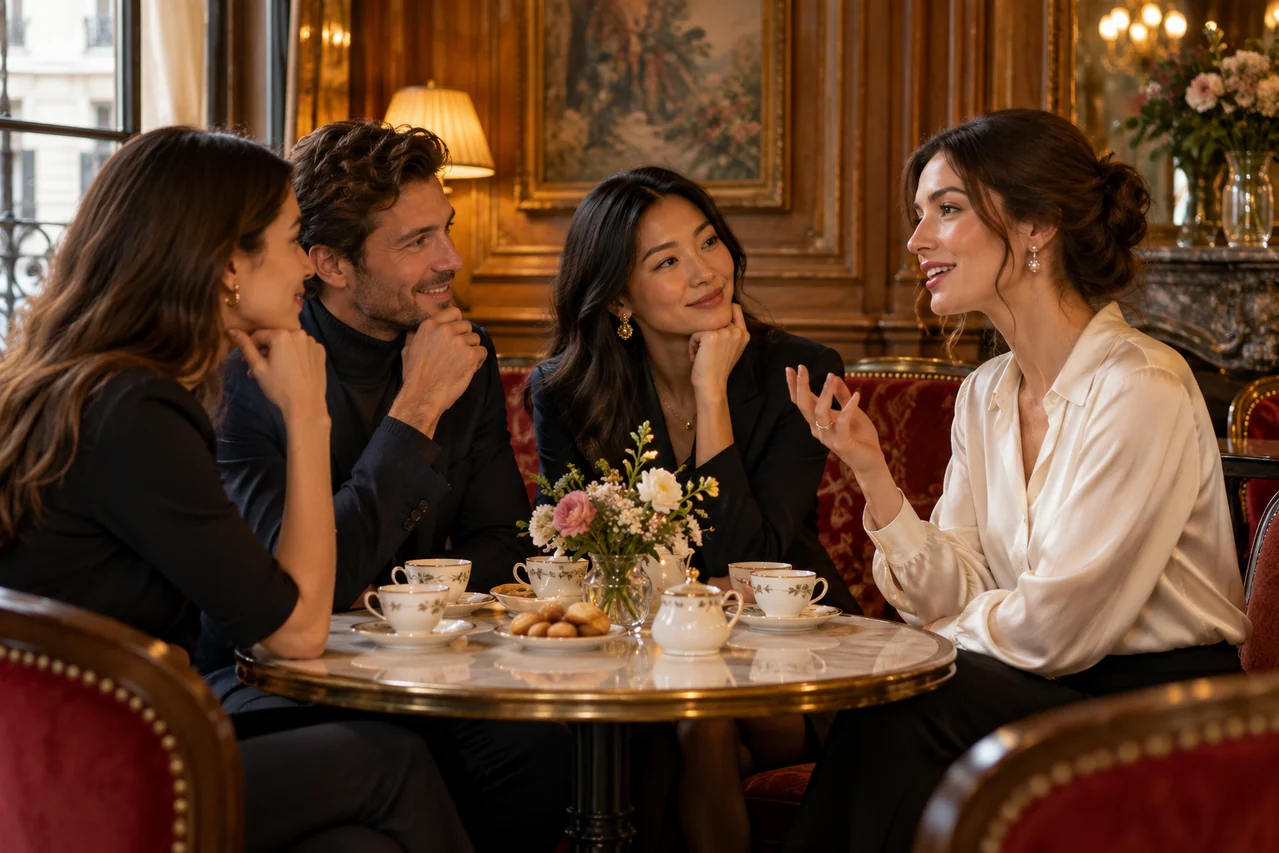
What changes when the visitor can answer back
A cultural experience often begins with information moving from an expert toward an audience. In a character-led conversation, the traveler can choose a question, react to a point and help determine what deserves further attention. This does not eliminate expertise. It changes the relationship with it. The visitor becomes responsible for articulating a curiosity, while the embodied character provides a particular route into the subject. The resulting exchange can feel more personal because it follows something the traveler genuinely wants to understand.
Why Marie-Antoinette is an accessible starting point
Many people recognize the queen before knowing much of her life. Clothes, Versailles, the Revolution and the famous brioche attribution supply an initial set of assumptions. Those assumptions are useful material for inquiry rather than a final account. Examining the 'Let them eat cake' story can turn a familiar claim into a conversation about evidence and reputation. The character's recognition makes the opening accessible, while the complexity of the subject allows the discussion to move well beyond the first anecdote.
The table gives the experience a different rhythm
Tea at Drouant provides the Paris setting for Elyrea's Marie-Antoinette Encounter. A table creates a different focus from a route built around moving between monuments: attention can remain on a person, a question and the exchange around them. The venue belongs to the present-day cultural staging, not to a claimed episode in Marie-Antoinette's biography. This setting can create a useful pause within a busy itinerary, allowing themes such as privacy, public image and personal choice to be explored without needing a full palace visit.
An interpreted figure is not an archival witness
The theatrical convention brings Marie-Antoinette into the conversation, but the traveler is engaging with an interpretation. Documented history, debated conclusions and dramatic language have different roles. The exact nature of her relationship with Fersen remains debated, and the brioche phrase is not established as hers. These distinctions do not drain the encounter of interest. They give it credibility. A visitor can enjoy the immediacy of the exchange while understanding that an embodied answer is not new proof of a historical event.
Returning visitors can begin at a deeper level
Guests who have already explored Versailles may not need another broad chronology of the French monarchy. They can arrive with questions about the queen's reputation, social circle or choices. A conversational approach can build from that knowledge rather than repeat a first-time introduction. A Marie-Antoinette experience after Versailles demonstrates how a known subject can become new through a different level of attention. The advisor should identify what interested the traveler previously so that the encounter feels like a continuation, not a restart.
Families can share the question without sharing the same knowledge
Younger travelers may find it easier to ask a person about a rumor than to follow a lengthy formal explanation. Adults can pursue the political and historical layers of the same subject. This is most effective when the content remains clear without becoming childish. Participation should also leave room for someone who prefers to listen. The encounter gives a family a shared focus while allowing different responses, potentially creating a conversation that continues later over a meal or during the next cultural visit.
Place the exchange where it advances the itinerary
The tea can introduce questions before Versailles, deepen a revolutionary Paris chapter or contribute to a journey about women's public lives. A fashion itinerary might continue with Chanel or Dior, while a Champagne subject can offer a different entrepreneurial perspective through Veuve Clicquot. Choose the connection according to the guest, and avoid repeating the same general introduction in every activity. Marie-Antoinette between Paris and Versailles helps give the two settings distinct roles within a longer cultural journey.
Present the format through its cultural purpose
For an advisor, the most useful description explains what guests can explore and how they can participate. Costume alone does not define the value of the encounter. Character, setting, historical substance and conversation need to work together. Tea with Marie-Antoinette offers a way to reconsider a familiar figure at human scale, with space for curiosity rather than a fixed conclusion imposed on the traveler. Its role in a premium itinerary is to provide meaningful attention to a subject the guest already has a reason to care about.
FOR YOUR GUEST ITINERARIES
Looking for a conversational cultural experience for your guests in Paris? Our team can help place Tea with Marie-Antoinette within a history, fashion or women's-lives itinerary.
Discuss your itinerary