
Start by changing the objective
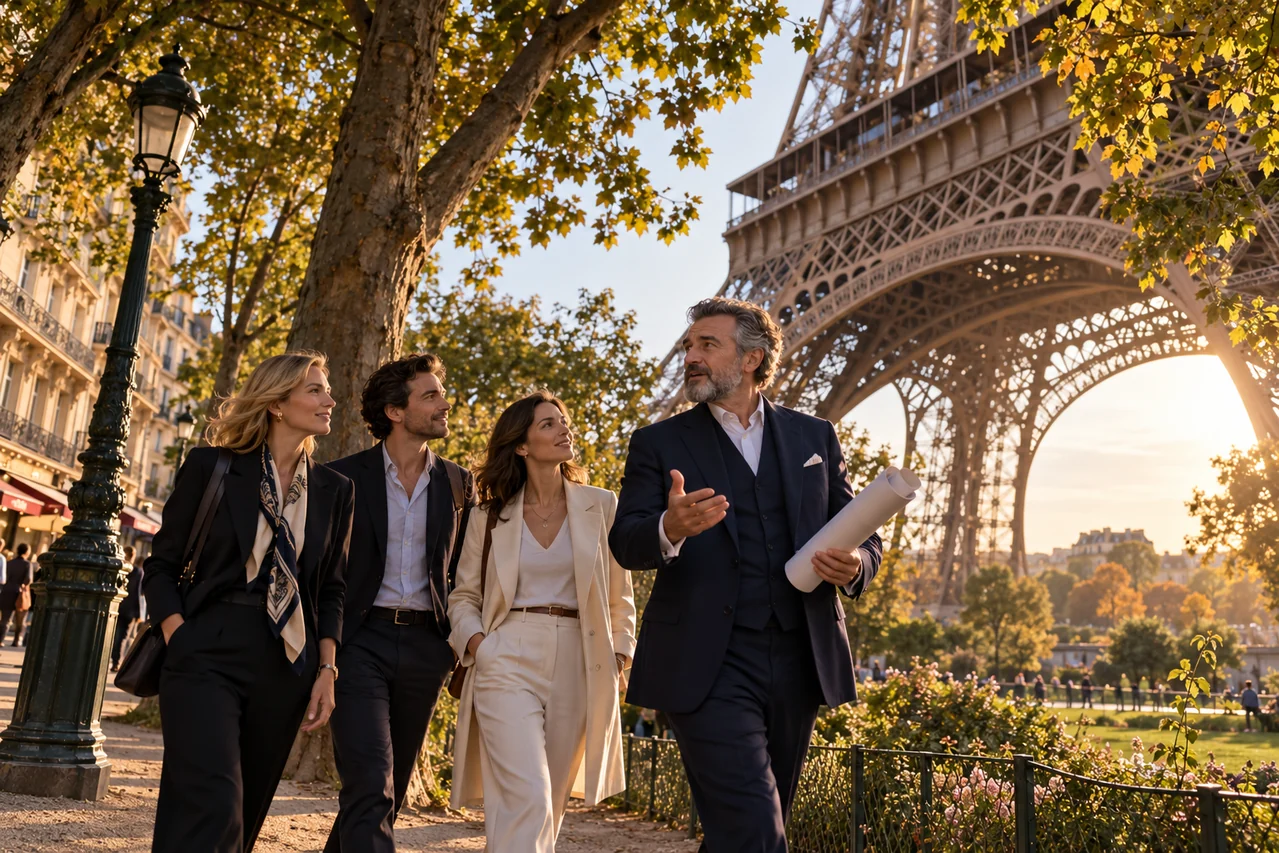
A repeat visit need not reproduce the first ascent. Remaining at ground level allows attention to move from the panorama to the structure itself. The inclined supports, lattice and scale invite questions that are easily missed when reaching the top is the main goal. This approach answers a familiar guest objection: having visited the tower does not necessarily mean having understood it. The advisor can offer a new purpose for returning, rather than simply proposing another version of the same attraction.
Read the metalwork rather than the postcard
Looking at connections and repeated elements makes the tower an engineering object again. Visitors can follow how separate pieces form larger patterns, and how the lower supports relate to the narrowing upper structure. No specialist knowledge is required to begin observing. How it was assembled provides context for those details. The pleasure lies in recognizing something previously overlooked, which can feel more rewarding to a returning traveler than adding another famous view to an already familiar collection.
Bring the exhibition landscape back into view
The Champ-de-Mars helps situate the tower within the 1889 World's Fair. Today's visitor sees a landmark standing in a known Paris setting; its first audience encountered a demonstration of modern engineering within a temporary exhibition world. Imagining that difference changes the surrounding space. A pause becomes an opportunity to consider what the fair was presenting and why the tower's scale mattered. The neighborhood is no longer merely the practical route between transport, ticketing and the monument's entrance.
Discover the people behind the name
Maurice Koechlin, Émile Nouguier and Stephen Sauvestre often surprise travelers who know only Eiffel's name. Introducing their roles converts a familiar landmark into a story of collaboration. Eiffel's support and public leadership remain central, but they belong alongside the initial engineering and architectural contributions. For guests who enjoy design, business or invention, this shift can be the strongest reason to return. It replaces the search for an unknown place with the discovery of an unfamiliar history in a known place.
Consider a monument people resisted
The artists' protest of 1887 supplies a revealing contrast with the tower's current popularity. Visitors can ask what they might have thought before seeing it integrated into generations of Paris imagery. The question invites disagreement and personal judgment, both valuable in a private cultural experience. Its early controversy also prevents the area's story from becoming a simple celebration of achievement. Innovation involved conflict over taste, identity and the kinds of structures considered appropriate for the city.
Follow the story into science
The tower's life did not end at the World's Fair. Scientific uses and radio communications extended its relevance, while Eiffel's aerodynamic work opens another part of his biography. For an American family, his team's contribution to the Statue of Liberty's internal structure can add a further connection. These themes should be selected according to the guest rather than delivered as an exhaustive list. The best return visit follows a clear question, leaving room for curiosity to guide the conversation.
Leave room for the neighborhood
A promenade along the Seine or a relaxed meal can give the area a more generous rhythm. The cultural Encounter need not occupy every available minute or require another major attraction immediately afterward. Travel advisors should treat walking distances, comfort and the day's other commitments as part of the design. The recommendation is a flexible planning principle, not a promise about any particular venue or route. Time to absorb a story can be as valuable as the next scheduled activity.
Use an Encounter to hold the ideas together
Eiffel by Eiffel brings a historical character into the cultural landscape through theatrical interpretation and interaction. It can give the engineering details and historical debates a human thread, rather than leaving them as disconnected facts. For returning guests, the result is a distinct reason to revisit the area: not repeating the ascent, but understanding decisions and people behind the view. An advisor can then connect the experience with the wider itinerary while treating any monument access as a separate practical arrangement.
FOR YOUR GUEST ITINERARIES
Your guests have already visited the tower? Ask Elyrea how Eiffel by Eiffel can turn the surrounding area into a new chapter of their Paris itinerary.
Discuss your itinerary