
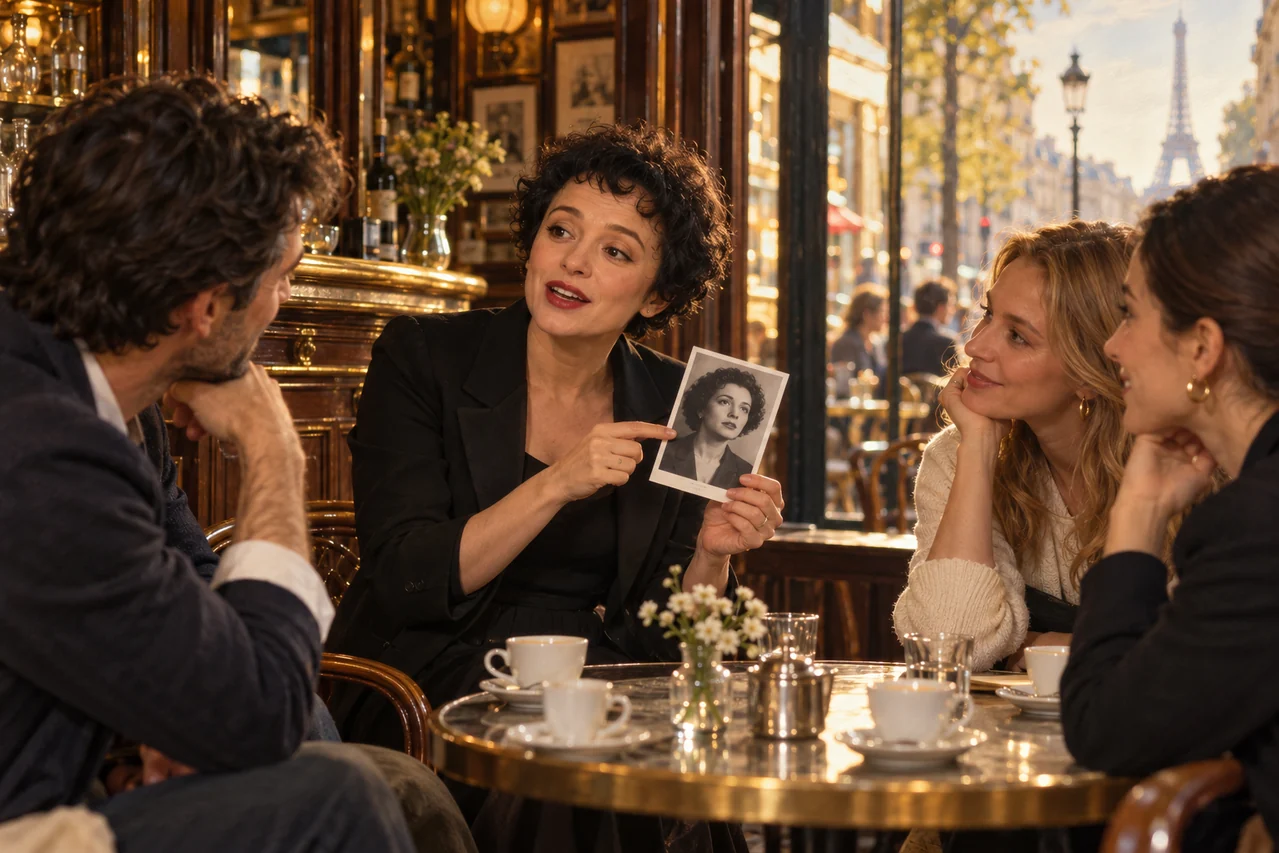
A real name behind a public identity
Édith Giovanna Gassion became known through a name that eventually carried its own mythology. Returning to the original name helps travelers approach a person whose public identity was constructed over time. Born in Paris in 1915, she entered a family connected to performance without the security later associated with celebrity success. The question is not whether her early life contained signs of inevitable greatness. It is how different environments and opportunities contributed to a career that could easily have taken another direction.
Childhood requires a careful distinction
Many accounts of Piaf's childhood contain dramatic episodes repeated until they appear unquestionable. The sidewalk birth story is a particularly clear example of legend overtaking documentation. Cultural storytelling can mention such narratives while identifying their status. That approach preserves their significance in the making of an icon without promoting them as certain facts. It also gives travelers a useful question: why does a story of extraordinary origins appeal so strongly when a celebrity's later life already supplies enough material for interest?
The family knew how to find an audience
Her father's work as an acrobat and her mother's singing placed public entertainment within her early world. A performer must gain attention, and that practical challenge formed part of the environment around her. It is more useful to understand this background than to turn every childhood detail into proof of a predetermined vocation. The connection also situates Piaf within a broader economy of popular entertainment, where earning an audience was work and professional stability was far from guaranteed.
Street singing made attention immediate
On the street, an audience was temporary and free to move away. Piaf needed presence strong enough to establish a relationship without elaborate staging. This practical condition helps explain the later emphasis on intensity in her performance image. Yet the story should not romanticize the street as a place where hardship automatically produces artistic truth. It was an environment with constraints. Skills acquired there needed further development when the singer moved toward professional stages and a more sustained career.
Leplée opened a professional door
Louis Leplée recognized her potential and introduced her to the cabaret setting of Le Gerny's. He also contributed to the identity La Môme Piaf. The encounter illustrates the importance of intermediaries in artistic careers: an ability must be noticed, framed and brought before an appropriate audience. Talent alone does not explain the transition. Her growth into an international performer began through such professional relationships, connecting individual presence with the institutions and people able to help it reach a wider public.
The sparrow became a recognizable image
Piaf, the colloquial sparrow, offered a memorable public name. Alongside La Môme, it suggested a popular Parisian identity and a small figure with unexpected vocal force. The name did not simply label the performer; it helped audiences recognize and remember her. Travelers can consider how a stage identity develops without dismissing it as false. Public presentation is part of artistic work, and the name reveals a relationship between the person, her physical presence and what a public expected from her performances.
A setback exposed the fragility of success
After Leplée's murder in 1936, unfavorable publicity affected Piaf through associations surrounding her environment, without making her responsible for the crime. Her career needed rebuilding. Raymond Asso later helped develop a more professional repertoire and presentation. This period complicates the discovery-to-stardom narrative and restores the importance of discipline and collaboration. The voice associated with spontaneity was also supported by preparation. A biographical experience gains depth when effort and vulnerability remain visible alongside the apparent naturalness audiences admired.
Follow the transformation through Paris
The early career lets visitors see Paris as a working environment for performance, not simply a romantic backdrop. Piaf's broader Paris story connects these beginnings to later stages and international recognition. Elyrea's Encounter can use character and interaction to make that development accessible to music lovers, families and returning travelers. For advisors, the early-years angle offers a distinct purpose: understanding how Édith Gassion became La Môme Piaf, rather than repeating familiar stories about the fully formed celebrity.
FOR YOUR GUEST ITINERARIES
For guests curious about the person behind the Piaf legend, contact Elyrea about a character-led Encounter within a musical Paris program.
Discuss your itinerary