
A story almost too perfect to be true
The familiar scene seems made for posterity. In April 1671, Louis XIV visits Chantilly as the guest of the Grand Condé. François Vatel directs the festivities and, under pressure, supposedly transforms cream into a sweet cloud that takes the château’s name. No contemporary testimony connects that invention to him. The Château de Chantilly now treats the attribution as legend rather than established fact. That correction does not make the story less useful. It changes the investigation from a flash of individual genius to the slower meeting of an old culinary technique, a prestigious place name and the reputation of a maître d’hôtel who came to personify French standards of service.
What the festivities of 1671 actually document
Vatel was central to the reception created by the Prince de Condé for Louis XIV. He coordinated provisions, staff, service, entertainment and the tempo of a household mobilized to regain royal favor. Madame de Sévigné’s letters transmitted the tragic conclusion: after several failures and anxiety over a delayed delivery of fish, Vatel took his own life. They say nothing about newly invented whipped cream. The three days at Chantilly in 1671 reveal the event’s logistical and political scale. Adding an unsupported pastry discovery may sound glamorous, but it shrinks his real achievement. Vatel was managing an entire system of hospitality, not improvising alone at a kitchen stove.
Whipped cream traditions predated Vatel
The practice of beating cream to incorporate air did not begin in a single afternoon. Related preparations circulated in Europe before 1671, under descriptions such as milk snow or shaped cream. Recipes could involve sugar, rosewater, egg white or other flavorings, depending on place and period. These dishes are not necessarily identical to modern Chantilly cream, but their existence makes a sudden, undocumented invention improbable. Food historian Pierre Leclercq emphasizes the distance between evolving techniques and the later heroic story. Culinary culture usually advances through repeated gestures, adaptation and renaming. The search for one inventor satisfies a modern appetite for origin stories; understanding the recipe’s history requires room for collective transmission and incomplete archives.
The name came after Vatel’s death
Vatel died in 1671, while evidence linking the preparation to the name Chantilly belongs to a later period. France’s Ministry of Agriculture highlights an account from 1784, when the Baroness d’Oberkirch described cream served during a reception at Chantilly’s Hameau. The château also places the relevant history in the refined social world of the eighteenth-century estate. A gap of more than a century matters. It does not identify the first person to sweeten and whip cream, but it shows why attributing the name to Vatel requires a missing documentary bridge. The responsible answer is therefore precise: the preparation’s exact origin remains uncertain, and the claim that Vatel invented it is not supported by the surviving evidence.
Why did the legend choose him?
Vatel offers everything a culinary legend needs: a great château, a king, extravagant festivities, uncompromising standards and a tragic death. Chantilly adds an elegant match among person, place and dessert. Later biographies, journalism and cinema could compress a complicated history into one memorable anecdote. Confusion about his profession made the attachment easier. Called a cook, Vatel naturally becomes a candidate for inventing a recipe. Understood as maître d’hôtel and controller of the prince’s household catering, he appears as an executive coordinator. What Vatel’s job really involved restores that larger responsibility. His historical importance does not depend on placing a whisk in his hand.
A myth that explains how heritage is made
Correcting the attribution should not mean replacing pleasure with a scolding. The legend demonstrates how culinary heritage forms. A preparation acquires the name of a prestigious place; the place then seeks a recognizable figure to embody its birth. Public memory selects an already famous character and supplies the missing gesture. Similar processes operate in art, fashion and political history. They create stories that travel easily while blurring professions, chronology and proof. For international travelers, the gap between tradition and archive becomes an introduction to French table culture. One learns to taste a story as carefully as a dessert—recognizing its ingredients, the hands that transformed it and the moment at which a name began to dominate memory.
From a recipe to the politics of the table
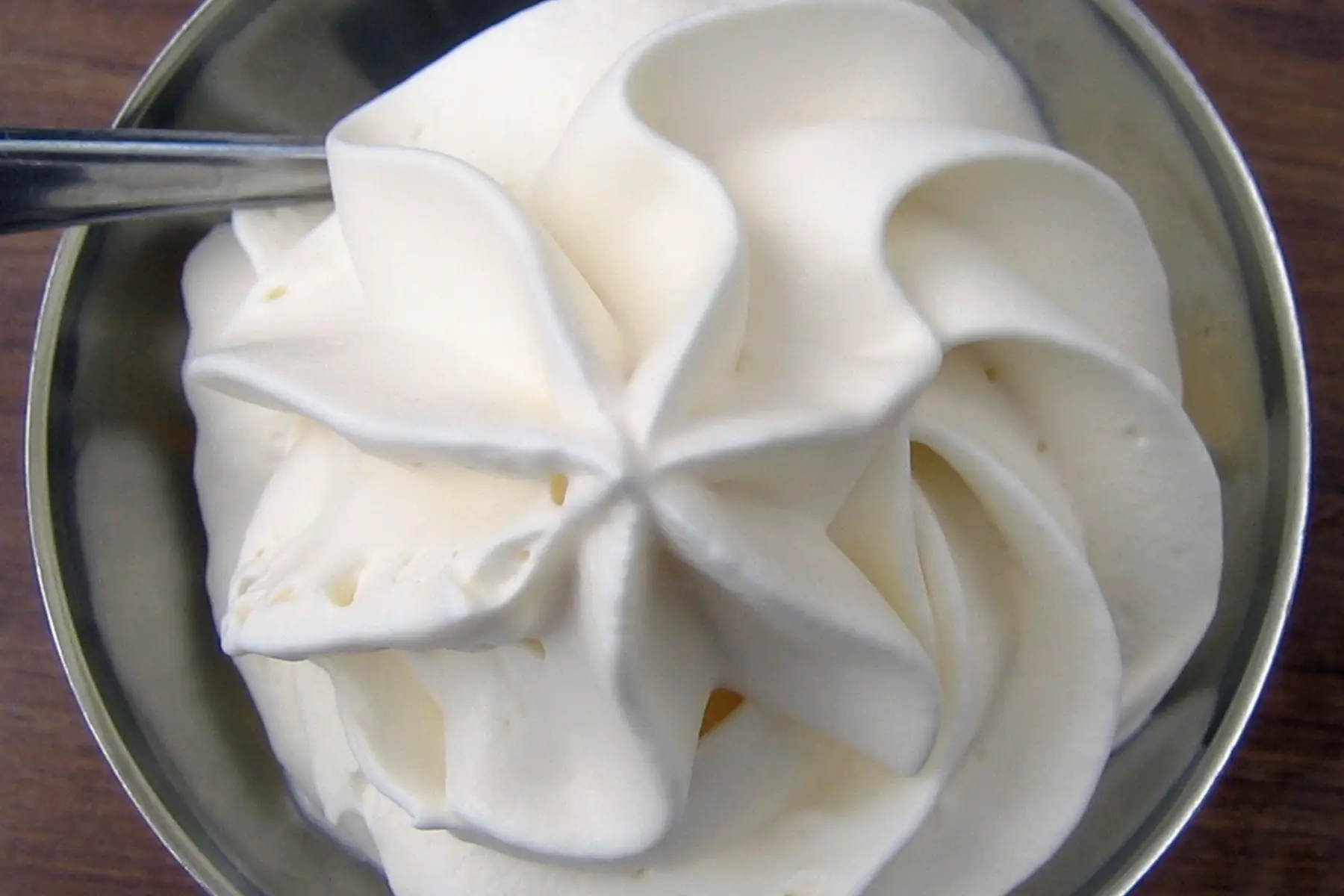
The Chantilly question opens onto a much larger subject. Under Louis XIV, hospitality displayed power. Food, service, sets, music and the movement of guests had to form one persuasive whole. Vatel worked at the center of that machinery. Why court meals were political instruments explains why delayed fish could feel like a personal and diplomatic catastrophe. The modern cream shown here illustrates today’s preparation; it is neither a reconstruction of 1671 nor visual proof. Its apparent simplicity nonetheless contrasts with the enormous organization from which legend claims it emerged. A familiar dessert becomes a route into labor, hierarchy and representation during the Grand Siècle.
B2B guidance: make uncertainty feel like privileged access
For travel advisors, the strongest sequence does not begin by announcing that a beloved story is false. Invite guests to recall the version they know, then test its elements against the dates: 1671 for the royal festivities and Vatel’s death, the eighteenth century for evidence associated with Chantilly. The Elyrea Vatel Encounter turns that gap into a conversation about his actual role, the pressure of service and the politics of hospitality. The dessert remains, but as an object of memory rather than a trophy of invention. Sophisticated guests gain something better than a correction: access to the workshop in which cultural legends are made.
FOR YOUR GUEST ITINERARIES
With Elyrea, turn the Grand Siècle into a living investigation of hospitality, where an irresistible legend never replaces historical evidence.
Discuss your itinerary