
Separate privacy from the type of experience
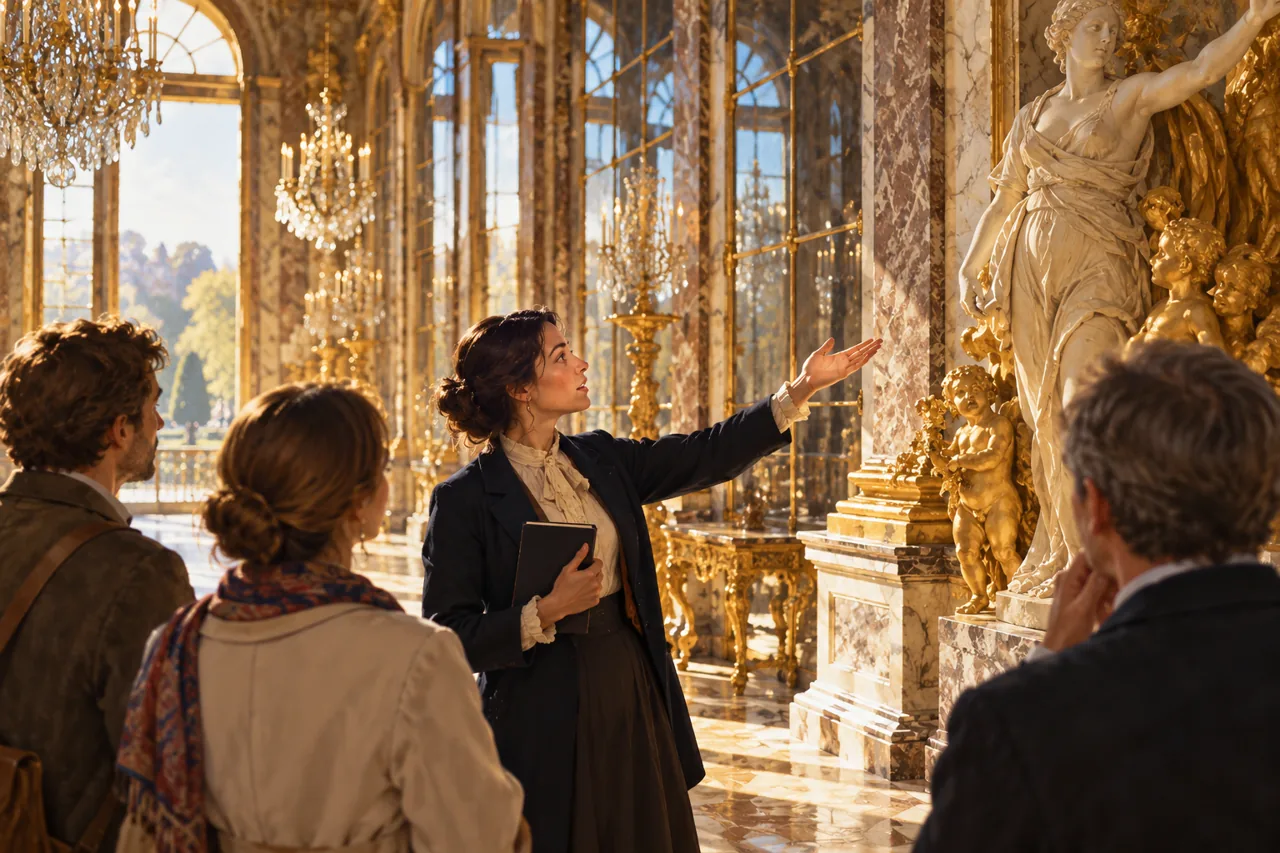
Private describes who shares the experience, rather than what happens within it. A private group might receive a guided visit, an expert discussion or a theatrical performance. Keeping those dimensions separate prevents a common misunderstanding: exclusivity alone does not tell the advisor how a subject will be interpreted. Begin with the guest's preferred relationship to culture, then consider the group format and degree of personalization that would support it. There are useful questions behind each preference for privacy. Does the group want freedom to ask questions, a shared experience among relatives or a route centered on one person's passion? These wishes can lead to different recommendations. A family may value an explanation paced for several generations; an experienced collector may want a narrow conversation that would not suit a general audience. Describe the benefit in practical terms before selecting the provider. Privacy also sits alongside the conditions of the setting. A privately arranged activity can take place in a busy public neighborhood, and a private guide does not automatically change a museum's entry rules. Make that distinction clear when discussing the itinerary. It helps the guests understand what has been tailored to them and prevents expectations about access, quiet or flexibility that the arrangement has not established. The resulting brief becomes more precise than a request for an exclusive experience alone.
When a guided visit provides the right foundation
A guided visit can establish a broad and coherent understanding of a monument, collection or neighborhood. It is especially useful when guests want to identify key works, follow a historical chronology or understand the development of a place. The guide's ability to explain, connect and respond to questions matters more than the number of facts delivered. Consider how that expertise will serve the guest's specific interests and which parts of the visit require access or arrangements beyond the guiding itself. Think about the knowledge that would make the rest of the stay easier to understand. At the beginning of a first Paris trip, guests may appreciate a small number of well-chosen landmarks and the connections between them. A museum-focused day may instead call for a route that explains how to look at selected works. The aim is not to compress everything into the available time, but to build a usable framework. Good guiding creates relationships between objects, people and places, so visitors can continue noticing things after the formal visit ends. Ask how the guide approaches a mixed group when some travelers have substantial prior knowledge and others are discovering the subject. That answer can reveal whether the visit is likely to remain inclusive. A foundation can be rigorous without being exhaustive, and accessible without reducing history to a sequence of entertaining facts.
When specialist knowledge becomes the priority
Some guests want to go further into a subject they already know. An art enthusiast may wish to compare techniques and artistic contexts, while a history-focused traveler may value close attention to documents and interpretation. A specialist format can meet those expectations when its depth is appropriate to the audience. The advisor should clarify the desired level in advance, avoiding both an introductory account that adds little and a discussion so technical that it loses the guest's interest. Depth can take several forms. One guest may enjoy comparing artistic techniques, while another wants to understand why an institution commissioned a building or how an author's working environment affected a book. Establish the actual question rather than assuming that a broad interest in art or history defines the appropriate expertise. Specialist visits also benefit from limits: following one line of inquiry carefully can be more satisfying than introducing many advanced subjects briefly. Ask what visitors should be able to recognize or discuss afterward, and use that outcome to assess the proposed content. Existing knowledge is not always evenly shared within a party. Where a committed enthusiast travels with less specialized companions, the visit should offer enough context for everyone to follow while allowing the enthusiast to ask detailed questions. That balance is a matter of preparation and communication, rather than simply labeling the visit expert-led.
What a theatrical Encounter adds
An Elyrea Encounter uses a performed character to give the cultural discovery a human perspective. Person, place, story and interaction work together, allowing visitors to enter a narrative rather than only hear an explanation. The character may be historical or fictional, and that distinction should remain clear. A theatrical experience contributes presence and dialogue; it does not make every dramatic detail a historical fact or replace the specialist knowledge required for other kinds of visit. The experience is strongest when the setting gives the character's perspective something concrete to work with. An architectural detail, a street or the atmosphere of a dining room can become a starting point for dialogue. Visitors are invited to consider a situation from within a story, while retaining the ability to distinguish the performance from documented history. A historical character's speech is an interpretation created for the encounter, not a recovered transcript. A fictional character such as Esmeralda offers access to a literary world rather than testimony from a real medieval Parisian. This distinction can enrich the experience by making its imaginative purpose clear. Guests do not need to abandon curiosity or critical thinking to enjoy theater. They can listen, ask how the person saw the world and reflect on the limits of that viewpoint. The form adds a relationship with a subject that can sit productively beside other kinds of cultural explanation.
Decide how much participation suits the group
Some travelers welcome a direct exchange with a character, while others prefer to observe before joining in. Think about language confidence, personalities and the relationships within the group. Participation should help guests engage with the subject, not become a test of enthusiasm. Ask how questions and quieter visitors are accommodated. The right level of interaction is the one that makes the guests comfortable enough to be curious, rather than the one that produces the most visible activity. A helpful brief describes the group's comfort with conversation as well as its interests. A traveler who loves history may be shy about speaking English in front of relatives; another may ask thoughtful questions despite knowing very little about the subject. Avoid equating confidence with knowledge. Let the cultural team know about significant differences in language fluency or familiarity with the theme, so the fit can be discussed before the activity is recommended. A quieter visitor can still follow gestures, listen to the exchange and connect the story to the place. Participation is valuable because it lets the narrative respond to the people present, rather than because every person must speak. For families, consider whether children and adults will recognize enough of the subject to share the conversation. A few clear contextual ideas can help generations engage together without giving everyone the same level of detail.
Use complementary formats in the same day
A museum visit can provide an artistic framework before a character-led experience connects that subject to the city. A monument tour can explain architecture while a performance introduces the ambitions or tensions associated with its history. These combinations work when each activity has a clear purpose. They should be arranged as distinct experiences, with access, timing and transfers checked independently. Repeating the same information in two formats is less valuable than letting one deepen the questions raised by the other. Start by identifying what each element contributes. If a museum session explains how an artist worked, a later neighborhood encounter might examine the social world that made the work possible. If a monument visit establishes the structure of court life, a character-led experience might explore the tension between public image and personal wishes. The second activity should develop the first, not function as another delivery of the same facts. Guests also need time to absorb the connection. A meal or an unhurried transfer can create a useful break, provided the schedule accounts for the group's actual pace. Explain the relationship when presenting the itinerary, so travelers understand why the two reservations belong together. It is equally reasonable to choose just one format if it already meets the brief. Combining activities is a cultural decision, not a requirement to make the day look more elaborate.
Compare the practical requirements
Format affects the day's rhythm as well as its content. Consider walking distances, time spent standing, the need for quiet listening, language and opportunities to pause. A strong cultural program remains attentive to the group's energy. Avoid assuming that privacy guarantees flexibility or that a theatrical encounter includes entry to the monument around which it takes place. Confirm the relevant details with the team responsible before presenting the finished itinerary to the guest. Practical fit is particularly important for multigenerational groups. Different walking speeds, interests and levels of stamina can change how a carefully chosen subject is received. Discuss those needs with the responsible team rather than assuming that all members will experience the route in the same way. Consider where the cultural activity sits in the day: a demanding museum visit may leave less energy for sustained listening afterward, while a comfortable pause can make another focused conversation enjoyable. Weather and street activity can also affect an outdoor experience, so clarify the applicable arrangements directly. Keep the distinction between interpretation and logistics visible in the proposal. A strong story cannot compensate for an itinerary that leaves the group rushed or tired. Equally, a smooth transfer is not the cultural benefit itself. Both need attention for the chosen format to work well.
Choose according to the desired outcome
Ask what guests should understand or feel able to discuss after the experience. If the priority is reading a collection, specialist guidance may be central. If it is encountering a human perspective on a familiar place, a theatrical format may add something distinctive. A combination can be appropriate when the day gives each experience room. The comparison becomes useful once it is tied to a guest brief; it is less useful as a universal ranking of guided visits against immersive experiences. A useful final comparison therefore describes the guest's question, the proposed method and the expected contribution to the trip. For one party, a guide may provide the clearest introduction to Paris; for another, an Encounter may give a familiar place a new emotional and intellectual perspective. Avoid suggesting that either choice is inherently more sophisticated. An experienced visitor can want a lucid explanation, and a first-time visitor can enjoy theatrical dialogue when the subject is introduced well. Record how the guests respond afterward, including which questions they continued discussing and which parts of the format felt comfortable. This turns a single reservation into knowledge that can inform another journey. It also allows the advisor to recommend future cultural experiences with a specific reason: the approach developed an interest that mattered to these travelers, rather than simply satisfying a general preference for something premium.
FOR YOUR GUEST ITINERARIES
Comparing cultural formats for a private Paris itinerary? Our team can explain how an Elyrea Encounter works and where it can complement the guided visits planned for your guests.
Discuss your itinerary