
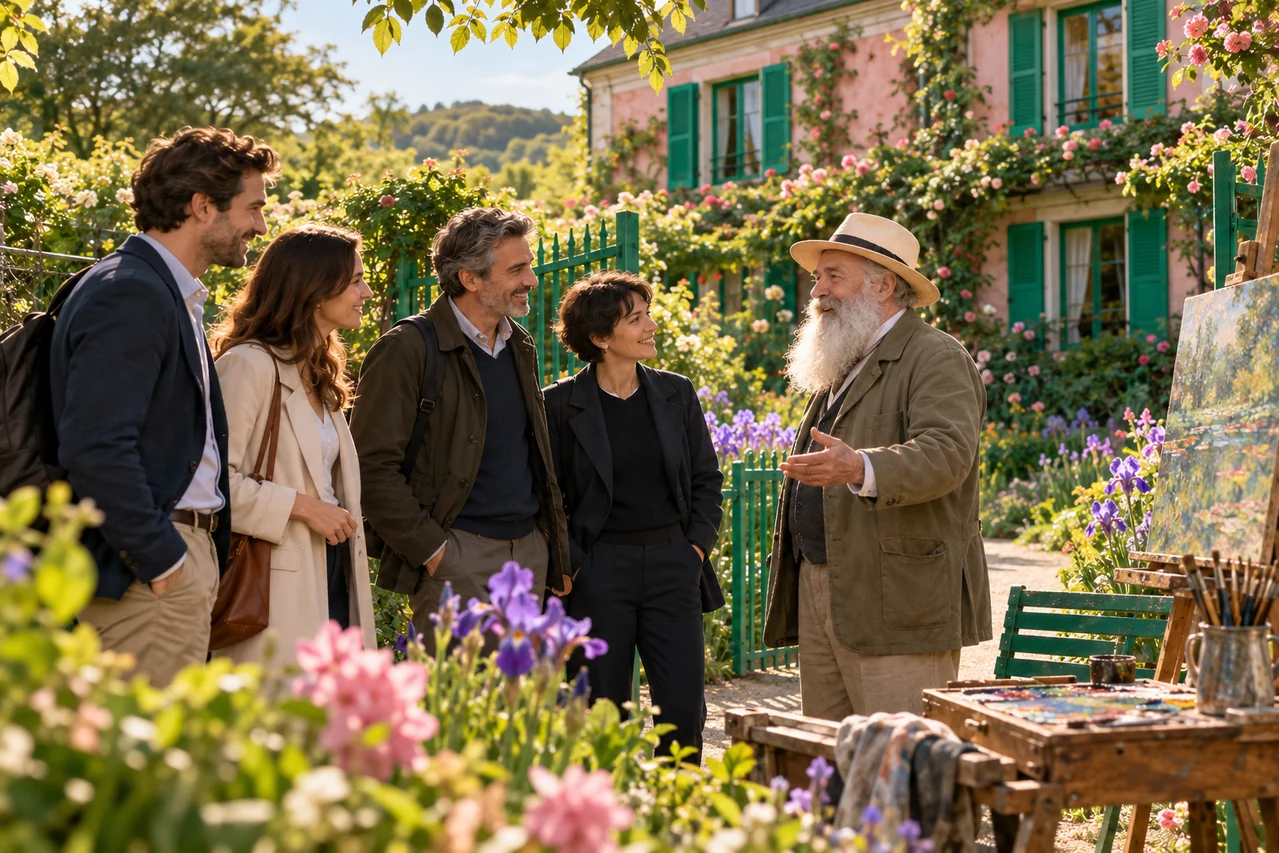
Decide which Monet the guest wants to meet
A keen gardener, a collector and a family may all be interested in Giverny for different reasons. The planning should begin with that distinction. Planting and seasonality may matter most to one guest; another may want to understand the Water Lilies or Japanese prints. Establishing the main question helps an advisor allocate attention before selecting additional stops. The destination can support several perspectives, but attempting to cover every one equally can make the day less coherent.
An introduction can happen before the excursion
A Paris viewing of Monet's works can give guests questions to bring to the physical garden, especially if it takes place on another day. Alternatively, a concise introduction during the journey can establish the painter's career and arrival in Giverny. The transfer should not become an uninterrupted lecture. Guests also need time to change pace as they leave Paris. The purpose of preparation is to make the place more intelligible, not to exhaust attention before arrival.
Give the Encounter a clear position
Inside Claude Monet’s Giverny can establish the narrative, connect spaces already observed or deepen a particular question. Its place should depend on the rest of the day rather than follow an identical formula for every guest. The embodied painter is a theatrical interpretation grounded in the subject, not a promise of special access to the property. Admissions, transport and other practical arrangements remain separate planning questions that should be confirmed independently.
The flower garden introduces color and season
The Clos Normand can begin the physical observation through planting, perspectives and changes across the living environment. There is no need to identify every plant unless the guest genuinely wants that level of horticultural detail. A more general art traveler can consider color relationships and how the view changes while moving. Monet's garden composition supplies useful context, connecting the practical life of plants with the artistic decisions that made the domain distinctive.
The house changes the scale of the story
Domestic rooms and the Japanese collection bring family, taste and artistic curiosity into the day. This is a useful transition from outdoor observation to the inhabited environment. It prevents the garden from being understood as the only meaningful part of Giverny. Guests can see a world of collection and daily relationships around the painter. Practical access conditions must be checked separately, and the narrative should not imply that every space is included simply because the Encounter concerns Monet.
Allow the water garden time to work
The pond rewards more than a pause for the familiar photograph. Guests can observe the meeting of plants, reflected sky and water, then consider why Monet returned to that subject. A few minutes of concentrated looking may add more than another anecdote. The sequence from introduction to physical observation gives the iconic image a different meaning. The advisor should protect this attention rather than fill every interval with movement toward the next recognized viewpoint.
A meal and afternoon choice should support the rhythm
A comfortable pause gives guests space to talk and absorb what they have seen. The later program can deepen the village's artistic history, return to a specific interest or simply leave independent time. Garden enthusiasts do not necessarily need another museum, and families may benefit more from a visual question than a new lecture. Adding Versailles or Auvers automatically risks turning a focused day into a dense accumulation of major destinations whose differences receive too little attention.
Let the return prepare a meaningful continuation
A later viewing at the Orangerie can reveal how the garden became a monumental painted environment. Why Monet repeatedly painted the Water Lilies gives that continuation a clear subject. The return to Paris need not contain a complete recap delivered immediately. The day's value may emerge through conversation and the next encounter with the works. A well-paced excursion leaves guests with a sharper way of looking, not just proof that they reached the place in the famous photographs.
FOR YOUR GUEST ITINERARIES
Tell Elyrea what your guests want from Giverny; our team can help place the Monet Encounter within a day shaped around art, gardens or family cultural discovery.
Discuss your itinerary