
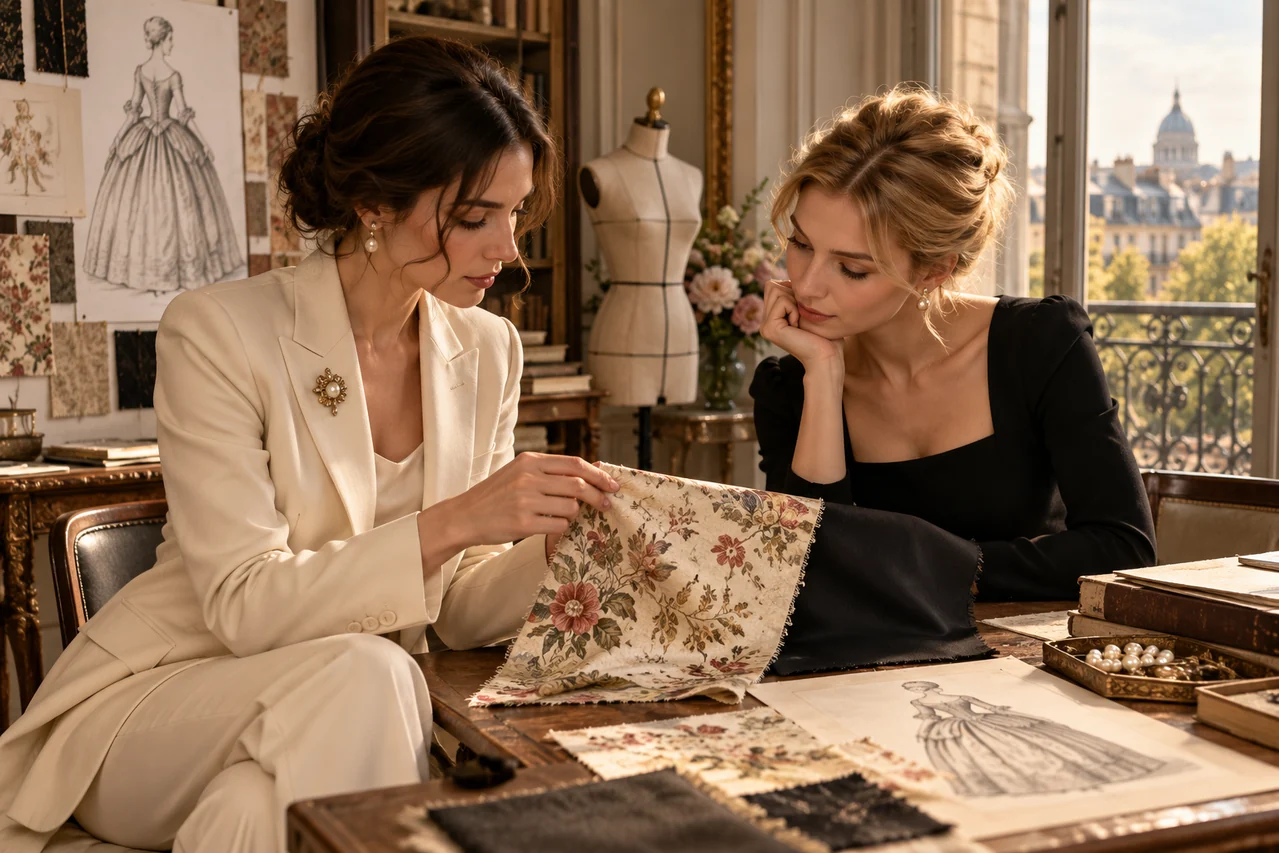
Compare a question rather than claim a direct lineage
Marie-Antoinette and Gabrielle Chanel were separated by period, position and the systems in which they lived. Placing them in one itinerary does not mean that one directly leads to the other. The useful shared question is how clothing communicates identity and social expectations. Each offers a different answer. This approach gives the advisor a coherent theme while preserving historical distance. The guest can compare contexts rather than hear an oversimplified narrative in which cumbersome royal dress inevitably gives way to modern freedom.
Royal appearance represented more than an individual
At Versailles, Marie-Antoinette's dress participated in the display of monarchical power. Her appearance was both personal and institutional, observed by people with expectations of what a queen should represent. Rose Bertin's role also reveals the professional creativity behind that image. How Marie-Antoinette became a fashion icon shows why a royal choice could travel widely and acquire political meanings. Even a simpler look could disturb the boundary between sovereign and private woman, making appearance a source of judgment rather than merely admiration.
Chanel worked within a different modern environment
Chanel contributed to changes in women's clothing through simpler lines, materials put to different uses and another relationship with movement. These choices belong to the social and cultural conditions of the twentieth century, not to a timeless opposition with the eighteenth-century queen. The guest should understand what the designs responded to in their own period. Chanel's transformation of women's fashion can deepen this chapter. It provides a basis for comparing clothing's meanings without assigning either woman a single position in a story of liberation.
Both images became bigger than the person
Marie-Antoinette's appearance could become a political accusation, while Chanel's silhouette became inseparable from a modern brand identity. In each case, public visibility linked style with reputation. The comparison has limits, but it allows a traveler to consider how a personal image is repeated, interpreted and used by others. Neither figure should be reduced to admiration. The queen's political agency and Chanel's controversies belong to their histories alongside cultural influence. A fashion journey gains maturity when it permits that coexistence rather than shielding the icon from difficult questions.
Use Versailles and Paris as different geographies of style
Versailles makes the court system and its demands of representation tangible. Paris, including rue Cambon and Place Vendôme, contributes a different environment of couture and modern prestige. The Chanel Encounter finishes on Place Vendôme, in front of the Vendôme Column. These settings should be explained through their specific role, not treated as attractive interchangeable backgrounds. A longer itinerary may use both destinations; a Paris-only journey can still introduce the royal chapter through Tea with Marie-Antoinette at Drouant before continuing into Chanel's city.
Let Dior complicate the comparison
Dior's New Look of 1947 adds another perspective on the body, abundance and the desire for change after wartime restrictions. It prevents the itinerary from ending with a simple contrast between monarchy and modernity. French style develops through debate and changing expectations, not one permanent ideal. Comparing Chanel and Dior can examine distinct design choices without turning them into complete opposites. Keep Christian Dior's historical work separate from later developments of the house, so that the guest knows which period is actually being discussed.
Bring social life and craft into the discussion
Who wore these clothes, what was expected of the wearer, and which skills made the appearance possible? These questions take the itinerary beyond the celebrated individual. Materials, workshops and the work of suppliers connect style with labor and economic life. A traveler may recognize a design differently after considering those processes. The advisor can combine cultural explanation with an appropriate exhibition or shopping time, while avoiding an unconfirmed promise of atelier access. The wider frame makes fashion interesting to companions who may not be dedicated shoppers.
Build variety around the central conversation
A French-style journey can alternate encounters, streets, objects and independent time. The shared thread is the social meaning of appearance, while each chapter supplies its own period and question. Tea with Marie-Antoinette, the Chanel story and Dior's world should not become three versions of the same biographical overview. Explain their different contributions to the guest. The outcome is a Paris experience in which known names become a route into cultural understanding, allowing shopping to sit within a richer story of style rather than carry the whole theme.
FOR YOUR GUEST ITINERARIES
Creating a French-style itinerary for fashion-minded guests? Our team can help connect Marie-Antoinette, Chanel and Dior Encounters as distinct cultural chapters.
Discuss your itinerary