
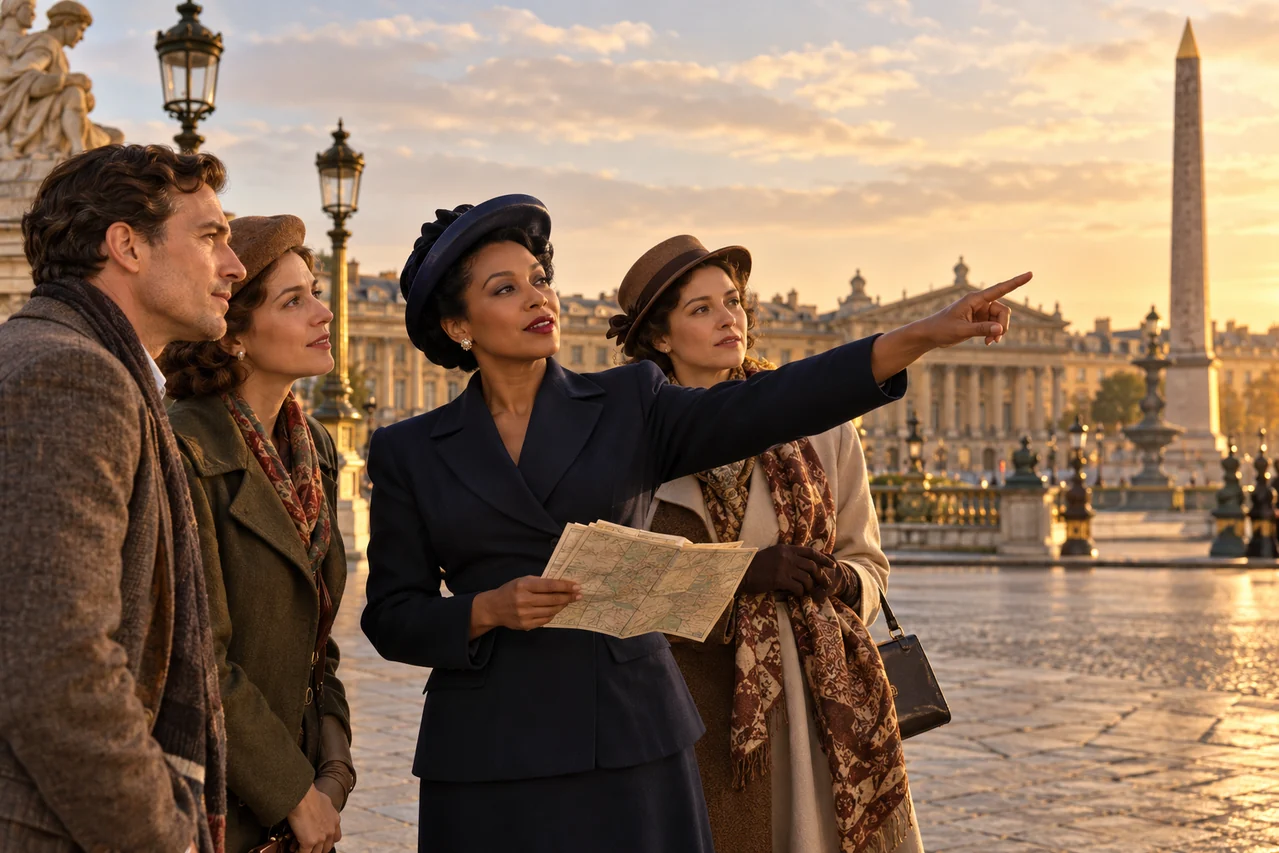
Looking beneath the present-day city
Between 1940 and 1944, occupation changed the conditions of life in Paris even while many familiar activities continued. People worked, traveled across the city and sought food under restrictions and the presence of military power. A historical walk is most useful when it reveals this tension between apparent normality and altered circumstances. The contemporary street is a starting point for imagination, but it requires explanation before it becomes evidence of the past.
Why Baker provides a human thread
Baker was already an international star and had acquired French citizenship before the war. Those circumstances help explain the resources she could bring to her engagement: contacts, mobility and a public identity that gave a reason for international travel. Her story provides a way to discuss responsibility through an individual life. It should not imply that she remained in occupied Paris throughout the period or conducted every activity in the streets guests traverse.
The everyday mechanics of intelligence
An intelligence story can be compelling without adopting the conventions of a spy thriller. Conversations, relationships and the ability to transmit information matter more than a succession of spectacular confrontations. Baker's contribution belongs within this practical world. Explaining it carefully also reminds visitors that wartime action depended on other people, who might remain less famous. The importance of an act is not determined by whether it produces a cinematic scene.
Reading the Opéra and Vendôme districts
Areas now associated with performance, luxury and international hotels offer a useful setting for discussing how elite social worlds intersected with power. Their proximity helps visitors understand the scale of the city. However, a square's place in occupied Paris and its connection to Baker are separate claims. An itinerary should make that distinction explicit. The Opéra-to-Concorde cultural route develops this geographical approach without turning every location into an invented personal address.
Resistance had many forms
The word Resistance covers movements, intelligence networks, clandestine publications, assistance to persecuted people and armed action. These activities were connected but not identical, and no single life represents them all. Baker's contribution can introduce this diversity rather than replace it. When visitors ask what resistance meant, concrete distinctions help them understand why different people could serve a common cause through very different work and with very different risks.
Bringing women into the account
Accounts organized around generals and battles can make women's contributions harder to see. Baker helps broaden the frame, although her exceptional celebrity should not suggest that she was typical of all women in resistance. The more productive question concerns the visibility of different kinds of work. Women in the Resistance extends the discussion beyond a famous individual and asks why some contributions remain less prominent in collective memory.
The story does not end at liberation
Baker's official recognition after the war acknowledges that her engagement was more than a celebrity anecdote. Her later struggle against racism shows another continuity in the use of her public position. Including that later life avoids freezing her as a wartime symbol. Guests can see how service to France and commitment to civil rights form parts of a broader trajectory, while retaining the differences between the conflicts and their historical circumstances.
Creating a respectful cultural day
For a traveler interested in war without seeking an exclusively military tour, this approach makes room for social history, art and individual decision-making. An advisor can pair the Encounter with another historical resource while allowing time to reflect. A subsequent Normandy program can explore a different dimension of the conflict. The connection should rest on historical understanding, rather than treating occupation, resistance and the D-Day landings as one undifferentiated narrative.
FOR YOUR GUEST ITINERARIES
For guests seeking a human perspective on the Second World War in Paris, our team can help place a Josephine Baker Encounter within a carefully paced historical itinerary.
Discuss your itinerary