
Identify the subject behind the broad interest
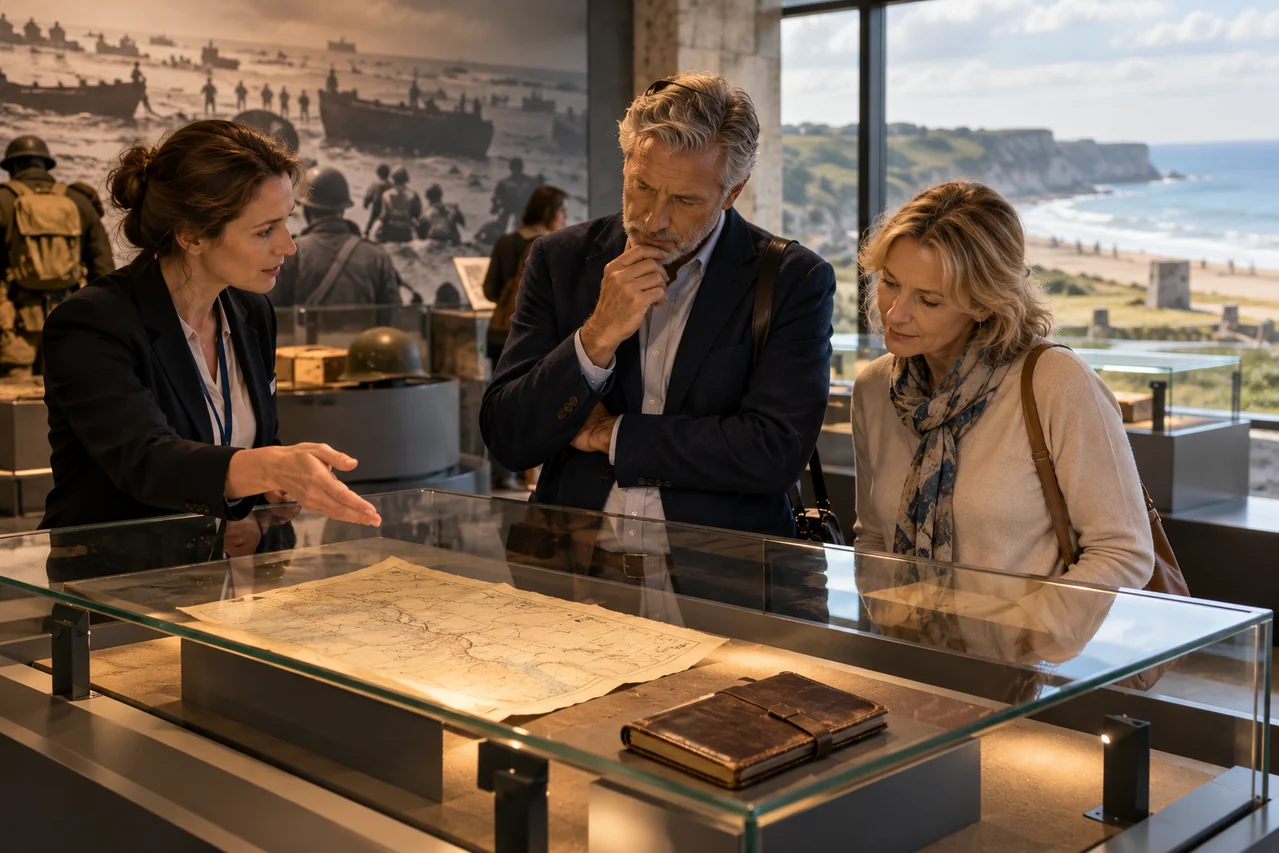
Second World War history includes operations, intelligence, occupation, civilian life and remembrance. A traveler may be highly knowledgeable in one area and unfamiliar with another. Ask what they have read and visited, and which questions they want the journey to address. An enthusiasm for military history does not automatically mean a preference for technical detail at every stop. This conversation helps an advisor distinguish a specialist's interests from a family connection or a general desire to understand the period more clearly. Ask the guest which questions are still open after their reading, previous visits or family research. A broad statement of enthusiasm can conceal a desire for detailed military analysis, social history or remembrance. Knowing the preferred depth also prevents an experienced traveler from receiving a long introductory explanation that leaves little time for the subject they came to explore. The advisor can describe alternative contributions without ranking them: Parisian occupation and resistance, the geography of a landing, or the way later generations commemorate war. These possibilities should be matched to the actual person rather than to nationality alone. The recommendation becomes clearer when it names the question the experience will help answer and the aspects it does not attempt to cover comprehensively.
Consider the companions as well as the enthusiast
A specialist often travels with people whose knowledge and motivation differ. The day should provide an accessible thread without removing the detail that matters to the main guest. A clear introduction, selected deeper explanations and space for questions can support both. Avoid building a schedule that requires every companion to share the same level of military interest. Pauses and varied forms of interpretation are useful, allowing the group to remain together while engaging with different aspects of the story. Companions can engage through a human story or a clear geographical problem even when they do not share the specialist's knowledge. That does not require removing technical content from the whole day. Give the group an accessible framework, then allow deeper questions to emerge where they add meaning. Discuss in advance how much of the trip will focus on war and how the rest of the stay provides another rhythm. Families may need more movement and pauses, while other groups may value extended conversation. The advisor should avoid making one enthusiast's interest an obligation for everyone without discussion. A shared point of entry works best when each participant understands why the program matters and has room to respond at their own level.
Use Paris to explore occupation and engagement
Paris can introduce life under occupation, resistance and liberation through places and individual perspectives. Joséphine Baker offers an especially compelling entry because her public image as a performer does not convey the full extent of her wartime engagement. Her Resistance story can connect a recognizable person with less familiar questions about action and responsibility. The narrative should remain serious and historically grounded, rather than treating celebrity as a shortcut around the complexity of wartime experience. A Baker-led Paris route can explain a historical environment while remaining distinct from a list of verified personal addresses. Her wartime activity extended beyond the city, and the narrative should not imply that every encounter or operation took place where the guest stands. This distinction makes it easier to evaluate the format's suitability. A guest interested in individual engagement and cultural connections may find it especially relevant, while someone seeking an exhaustive account of occupation institutions may also need another form of interpretation. The two can complement one another. The advisor should explain how the character supplies a perspective and how other resources establish chronology and evidence, rather than assume that a compelling performed voice fulfills every historical requirement.
Use Normandy to make the terrain intelligible
At Omaha Beach, relief, distance and the arrangement of the landscape help explain difficulties that a map alone may leave abstract. Give travelers time to observe before moving to the next site. The landscape does not interpret itself, but it can become evidence within a clear explanation of the landing. Reading Omaha Beach's terrain is particularly relevant to guests who want to understand how events unfolded. The day should connect physical observation with context rather than rely only on dramatic retelling. The terrain can be approached through a sequence of practical relationships. Where did the forces arrive? What exposed ground lay ahead? Why did exits and higher positions matter? These questions let a first-time visitor reason from observation, while a knowledgeable traveler can add sector detail and chronology. Choose viewpoints according to access, mobility and conditions rather than treating every location as mandatory. A concentrated Omaha chapter can provide more understanding than a rapid attempt to cover every Normandy beach. The explanation should also make clear that reaching the shore was only a beginning. The objectives and subsequent campaign give movement inland its significance, keeping the familiar landing image connected with the larger undertaking that followed it.
Offer technical distinctions when they serve the question
A well-informed traveler may appreciate distinctions such as the relationship between Operations Overlord and Neptune. Overlord concerns the broader Allied undertaking in Normandy, while Neptune concerns the amphibious assault phase. Such detail becomes valuable when it answers the guest's actual curiosity and helps situate the site. It should not be inserted merely to demonstrate expertise. Define terms clearly enough that accompanying travelers can follow, then allow the specialist's questions to determine how much further the discussion needs to go. Technical distinctions should be introduced near the problem they clarify. The relationship between Neptune and Overlord helps visitors distinguish the assault from the broader operational framework. It need not become a test of whether the traveler can remember every codename. The same principle applies to units, logistics and the differences between beaches: include detail when it changes the understanding of an event, and adapt its depth to the guest's question. A specialist may welcome a sustained explanation where a general audience needs only a few clear links. Both should avoid the impression that one dramatic moment or one nation's contribution encompasses the whole campaign. Precision is useful when it opens relationships rather than when it merely increases the volume of terminology spoken.
Give narrative and documentation different roles
An individual perspective can humanize a large event. In the Omaha Beach Encounter, Charles is the GI who guides the narrative; his performed perspective remains distinct from documentary biography. The performance offers a way into the experience of the landing, while historical context establishes what can be documented. This distinction matters especially for enthusiasts, who may be alert to unsupported detail. A compelling narrative gains credibility when it acknowledges its convention and does not pretend to replace evidence. The character's limited viewpoint can help make the difference between immediate experience and retrospective explanation visible. Charles does not know everything a later historian can reconstruct, and that uncertainty provides a human scale without requiring invented private thoughts. Keep his narrative role separate from a real veteran's biography, especially where the guest has supplied an ancestral connection. Documents and recorded testimony have particular sources and circumstances; the performed account has another cultural function. Emotional engagement is not proof that the two are interchangeable. An advisor can describe the Encounter as a way into the questions of movement and information, alongside actual evidence, rather than a replacement for it or a promise to reproduce the sensations of battle for contemporary visitors.
Allow remembrance to change the pace
Cemeteries and memorials require a different rhythm from a technical discussion of an operation. Leave room for silence and personal response, especially when the guest has a family connection. The advisor should ask about that connection beforehand and avoid attaching unverified family information to a particular place. Respectful remembrance travel emphasizes why a premium experience depends on care and preparation. The day can be both intellectually detailed and emotionally restrained, without asking every visitor to feel or express the same response. The transition into remembrance deserves as much planning as the sequence of historical stops. A cemetery may require a quieter register, time apart or a particular family moment. Do not assume that all visitors will react similarly or wish their connection to be discussed publicly. Where specific ancestral evidence is incomplete, offer the broader context honestly instead of attaching the story to a location for emotional effect. Civilians should remain part of the wider account, so liberation and the costs of fighting can be understood together. A meaningful day does not need constant dramatic intensity. It can move between analysis, individual perspective and silence, with each component receiving the time appropriate to the place and the guest's reasons for visiting.
Connect Paris and Normandy with a clear progression
An itinerary can move from the experience of occupation in Paris toward the landing and wider Normandy story. This sequence helps travelers see D-Day within a broader European context. It does not require compressing both destinations into an exhausting day or suggesting that one explains the whole war. Establish the guest's priority, assign each chapter a role and choose the appropriate level of interpretation. An Elyrea Encounter then becomes a specific human perspective within a wider journey shaped around that guest's historical interest. Explain the progression when presenting the journey. Paris and Normandy answer different questions, and their connection becomes stronger when those differences are named. A Paris experience might explore engagement under occupation, while Omaha introduces assault geography and remembrance. Additional resources can develop a subject that neither Encounter attempts to cover comprehensively. The itinerary should preserve enough space for guests to absorb these changes of scale and tone. Confirm the actual product format and surrounding arrangements before promising them, then assess the program through what it enables the traveler to understand. The result is a considered historical journey, with human perspective and evidence in complementary roles, rather than a sequence of wartime experiences assumed to be coherent simply because they share the same broad period.
FOR YOUR GUEST ITINERARIES
Planning France for guests interested in the Second World War? Our team can help place the Joséphine Baker or Omaha Beach Encounter within an appropriate historical itinerary.
Discuss your itinerary