
He inherited a changing military world
Napoleon did not invent his army in isolation. Revolutionary France had transformed military recruitment and organization, while earlier officers and thinkers had developed ideas he could use. His distinction lay partly in combining available changes with unusual effectiveness. Recognizing that inheritance replaces a miraculous biography with a more useful historical question: how did a commander take existing institutions and practices and make them work together under the conditions of a particular campaign?
Speed was an organizational achievement
Rapid movement could help create an advantage before opposing forces joined together. But speed required roads, supplies, coordination and endurance, not merely determination at headquarters. Soldiers and officers made it possible in practice. The movement of an army is therefore evidence of an operating system as much as a commander's personality. Travelers examining strategy can ask what had to happen behind an apparently brilliant decision, bringing preparation and physical constraints into a story often dominated by dramatic battlefield moments.
Army corps created flexibility
Large formations containing several arms could move with a degree of autonomy and later concentrate for battle. This corps organization helped Napoleon manage substantial forces across a campaign. The principle is accessible without an exhaustive military diagram: separate formations needed enough independence to function and enough coordination to act together. That balance also created demands on communication and subordinate leadership. A useful account examines the structure of the army alongside the movements drawn on a map.
Concentration mattered at the decisive point
Napoleon often sought a local advantage rather than simply relying on the total size of his forces. Separating an enemy's formations and bringing his own together could change the relationship between them. The difficulty was practical as well as conceptual. A promising maneuver depended on knowing where opponents were and moving in time. Austerlitz offers a specific case through which to consider those relationships, without treating every campaign as a repetition of the same flawlessly executed formula.
Information was always incomplete
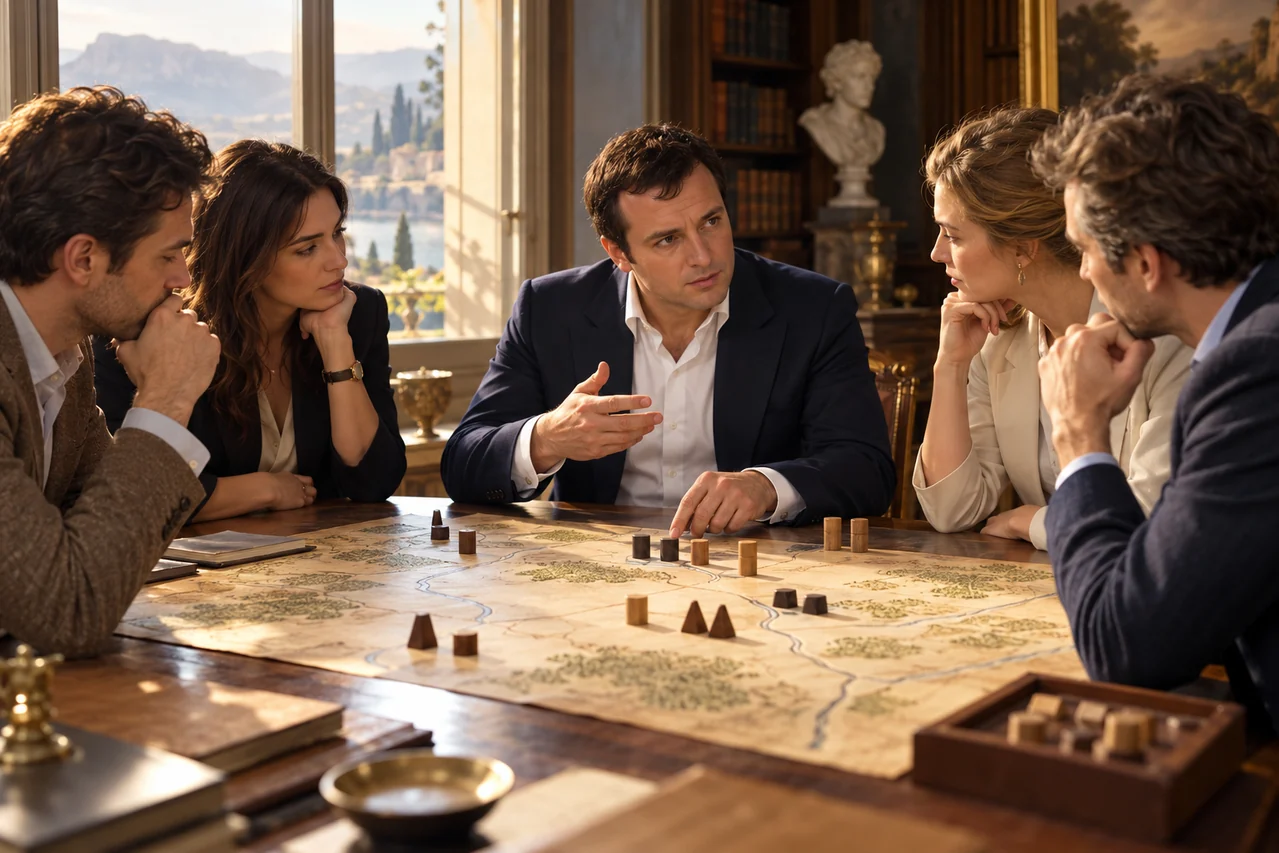
Commanders had to act without the complete picture later available to historians. Reports could be delayed, assumptions mistaken and enemy intentions unclear. This uncertainty is central to understanding why some decisions seemed plausible when made, even if their consequences were disastrous. For a cultural Encounter, it supplies a productive form of participation: guests can consider a choice using limited information, then compare their reasoning with the historical outcome. The exercise should illuminate uncertainty rather than pretend to recreate every detail.
Subordinates turned plans into action
Marshals, officers and soldiers performed different tasks in different campaigns. Their effectiveness could determine whether an intention became a result. Napoleon's supreme command did not mean he personally executed every movement or controlled every local situation. Restoring those contributors prevents the lone-genius explanation from swallowing the actual military history. It also makes the story more interesting for guests concerned with organization, because success depended on the relationship between centralized decisions and people acting under their own immediate constraints.
Opponents and conditions changed
No advantage remained permanent. Adversaries learned, coalitions developed and the demands of operating across large territories increased. Losses, supply difficulties and changing circumstances tested the system. The Russian campaign shows particularly clearly why a reputation earned through earlier victories could not guarantee later success. A serious explanation must include adaptation on both sides. Napoleon's enemies possessed agency, and the environment was not a passive stage on which his methods always produced the intended outcome.
Reputation should open a question
Calling Napoleon an exceptional commander can be a starting point if it leads to examination of specific choices and mechanisms. It becomes less useful when it substitutes for explanation or excuses the human cost of warfare. Elyrea's strategy Encounter can help travelers distinguish achievement from legend through discussion grounded in history. For an advisor, that gives military-minded guests a focused cultural purpose while allowing families and non-specialists to engage with the same questions of organization, uncertainty and consequence.
FOR YOUR GUEST ITINERARIES
Your guests want more than a list of Napoleonic victories? Contact Elyrea about building a strategy-focused Encounter into their Paris program.
Discuss your itinerary