
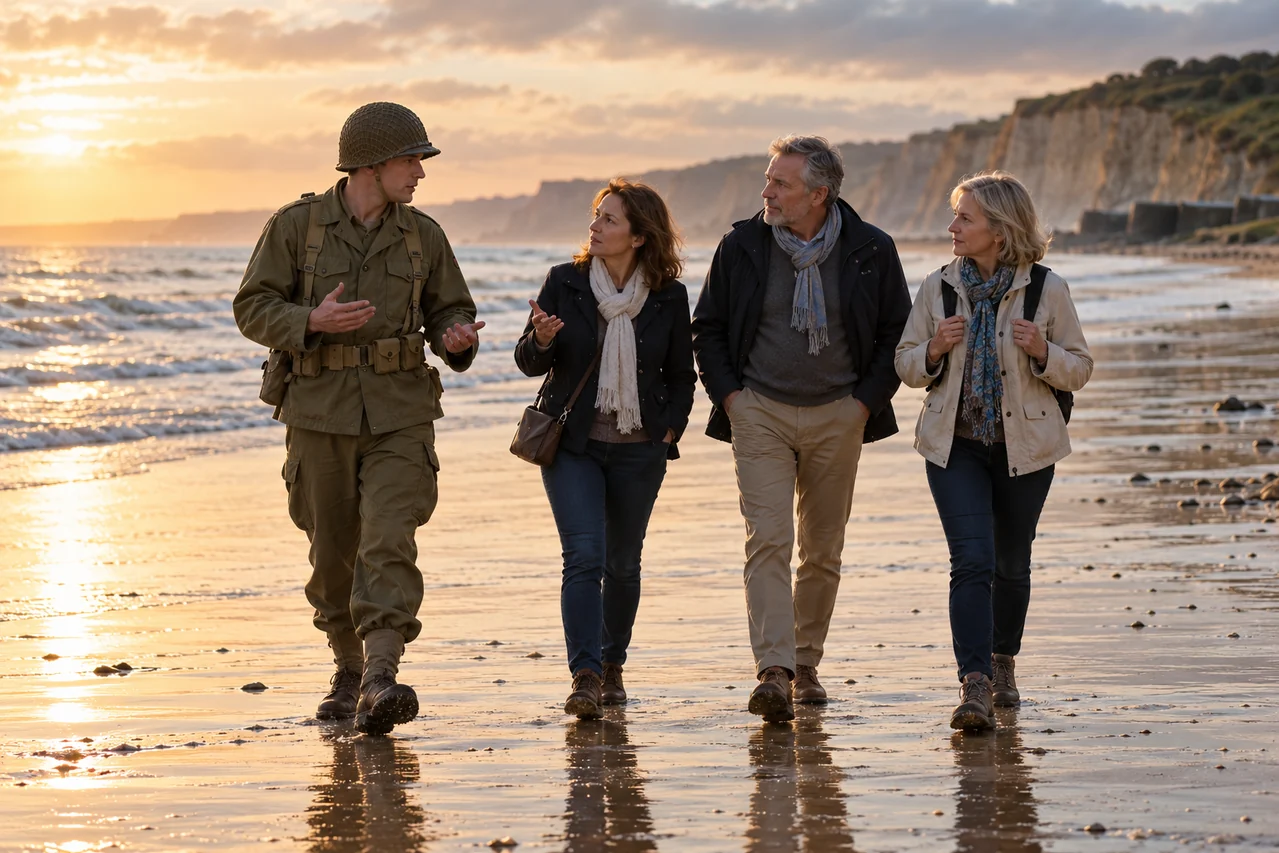
A battlefield guide can explain the operation in depth
A skilled historical guide can connect preparation, landing sectors, defensive positions and movements inland. This structure is especially valuable for guests who want detailed military understanding or who have studied the campaign beforehand. Terrain analysis can show why a route, height or sector mattered, while chronology helps distinguish local events. The format should not be dismissed as merely conventional. Its cultural contribution lies in connecting evidence and place, with a level of detail that can be adapted to the visitor's knowledge and interests.
Charles changes the scale of attention
The Elyrea Encounter introduces an American GI's narrative perspective, concentrating on what one person might see and understand rather than on an all-seeing overview. Movement, incomplete information and the difficulty of acting under uncertain conditions become central questions. The experience can make terrain meaningful at a bodily scale without claiming to reproduce battle. A guest may understand the map well and still gain from this shift of viewpoint. The difference is a way of engaging with history, not simply another list of facts performed in costume.
Keep narrative and documentary testimony distinct
Charles is the character through whom the Encounter approaches the landing; his performed perspective is not a documented biography or the voice of every soldier. Actual testimony carries its own sources and particular circumstances. Keeping those forms distinct allows the narrative to be valuable without pretending that emotional proximity guarantees historical proof. Understanding individual experience at Omaha also means acknowledging variation. The visitor can follow one perspective closely while retaining the wider picture and the many real stories that no single character could encompass.
First-time visitors may benefit from a combination
A concise introduction can establish Omaha within the Allied operation before the Encounter focuses attention on the person-scale of the landing. Terrain observation can then connect the two. This sequence gives guests enough structure to interpret the narrative without overwhelming them with military terminology. The difference between Overlord and Neptune provides a useful foundation. The day should allow time for questions and reflection, so that complementary formats build understanding instead of repeating several compressed introductions to the same historical event.
Specialists may want a different emphasis, not a lesser experience
A guest with substantial reading may prefer more time on sectors, positions and movement. The Encounter can still contribute a new relationship with familiar terrain, but it should not replace the analysis the visitor specifically seeks. Advisors should ask which uncertainties or interests the guest brings rather than assume expertise removes the need for a human perspective. The strongest balance makes each component useful: documentary and geographical detail supply breadth, while Charles's narrative lens draws attention to the limits of information and the scale of individual action.
Families can use the character as an entry point
For younger travelers, a person and immediate questions may be easier to grasp than the whole campaign at once. The Encounter can lead from Charles's viewpoint toward the larger operation, provided it does not turn war into a game or claim a universal soldier's emotion. Parents and adolescents can then discuss what they have observed and how they know it. Suitable pacing and age-appropriate explanation remain important. The aim is shared understanding, with space for different responses, rather than an identical emotional experience imposed upon every generation.
Personal remembrance should lead when a family history exists
A descendant's interest in a relative, unit or particular place deserves priority over a generic program. The Encounter can complement that journey but cannot substitute its narrative for the actual ancestral record. Available information should shape the route and the amount of time given to memorial places. Some guests may prefer less performance and more quiet attention; others may welcome the human-scale interpretation alongside their personal research. Respectful personalization recognizes those differences instead of assuming that every American traveler or family connection calls for the same format.
Place the choice within a wider history and itinerary
Omaha belongs to the Allied effort and to the continuing campaign in Normandy. It can also connect with an earlier Paris chapter about occupation and resistance, such as Joséphine Baker, without pretending that two experiences tell the whole war. The advisor's task is to give each a distinct role and preserve appropriate pacing. Charles adds a narrative perspective to context, terrain and remembrance. The right combination is the one that lets guests understand the event and its human significance while respecting the limits and seriousness of the place.
FOR YOUR GUEST ITINERARIES
Choosing the right Omaha experience for your guests? Contact Elyrea to discuss how the Encounter with Charles can complement battlefield interpretation and their wider Normandy program.
Discuss your itinerary