
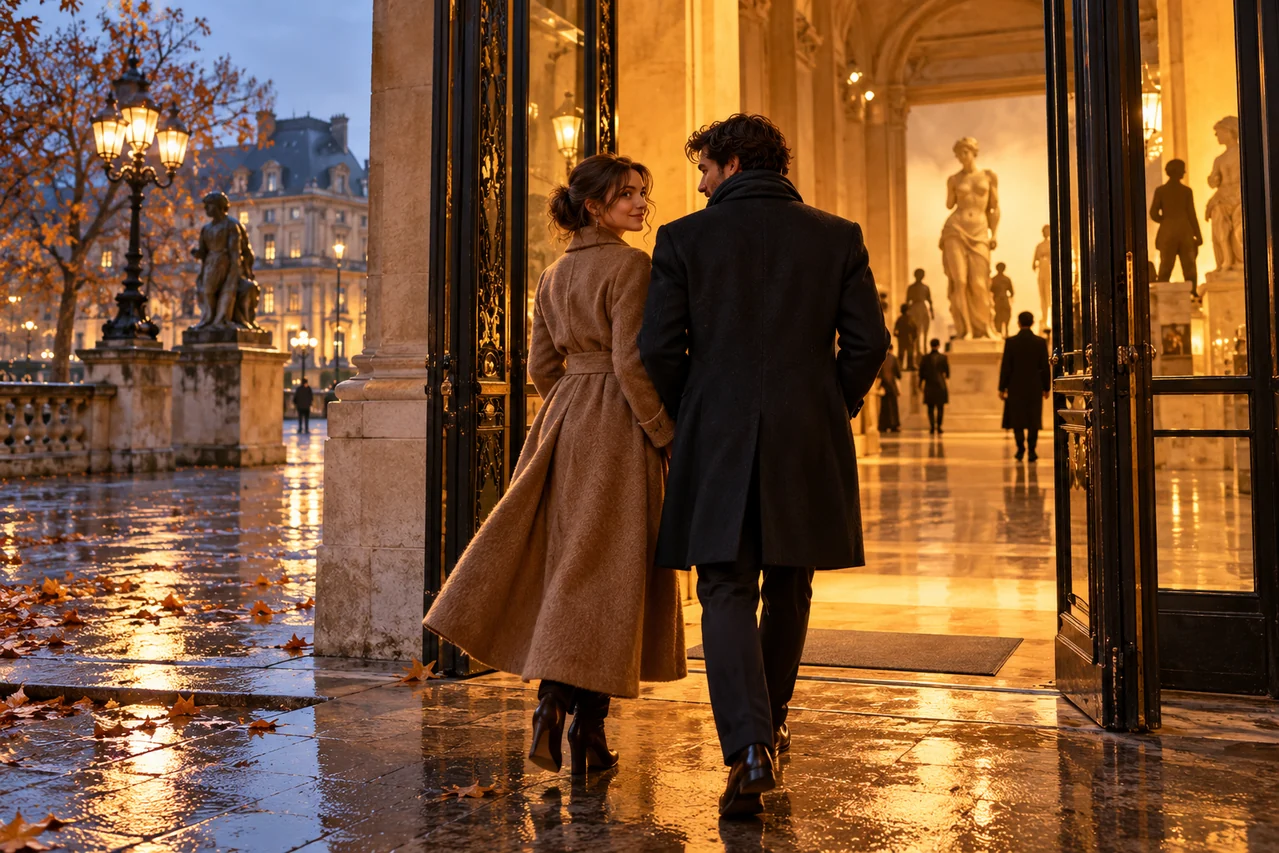
Choose the season for the guest's interests
A traveler whose priorities are painting, literature, fashion or gastronomy may find a cooler-season Paris stay especially coherent. The city offers many forms of cultural attention that do not depend entirely on prolonged outdoor time. Present the season through these actual possibilities rather than promising lower prices or empty attractions. Different guests value different conditions, and neither reduced crowds nor favorable rates should be assumed. The recommendation is strongest when the chosen season supports the way the guest wants to experience Paris. Consider what the guest expects to spend time doing, rather than beginning with a seasonal marketing claim. Someone coming mainly for paintings, reading or a particular cultural question may welcome a different balance of the city from a traveler planning long outdoor days. This does not mean assuming that every art lover prefers winter or that warm weather makes cultural depth impossible. It means matching the program to the purpose of the stay. Describe the proposed rhythm and verify practical conditions before promising it. The season becomes one part of a considered recommendation, alongside the guest's energy, preferred geography and interest in the people and works through which Paris can be explored.
Build around cultural interiors
Museums, monuments, cafés and gastronomic settings can give a day several layers of interest. They should be connected by a theme or a neighborhood rather than collected simply as places to escape the weather. A morning spent looking at art might lead to a conversation about artists, while a literary walk can continue with time in a bookshop. Explain the role of each stop. Indoor culture then forms the positive center of the itinerary instead of appearing as a series of fallback activities. The quality of an interior sequence depends on selection. A museum visit can focus on a few relationships between works instead of attempting every collection, and a character-led experience can offer a different mode of attention from a guided room-by-room account. The advisor should know what each component contributes before arranging them consecutively. Hospitality spaces also need a cultural purpose beyond shelter: a meal, tea with Marie-Antoinette or conversation can support a narrative when it relates genuinely to the subject. Practical access remains a separate matter. A reader should not infer that every interior mentioned is included in an Encounter, available on demand or interchangeable with the setting of another experience merely because it would be convenient in poor weather.
Work with a smaller geographical area
Long urban crossings can make a cold or wet day feel more demanding. Organizing a sequence within a manageable area reduces transitions and gives the guest more time for the activities themselves. A brief walk, a cultural visit and lunch nearby may provide a satisfying rhythm. Avoid assuming that every encounter is indoors or that its location can be changed at will. Establish the actual setting and practical conditions, then arrange the surrounding program to make the day comfortable and coherent. A compact day should still have progression. Begin with a question, add a place or work that makes it more tangible, then allow a different perspective to deepen the theme. Nearby activities selected only for geographical convenience can remain culturally disconnected. Think also about the demands of transitions: entering another institution, changing transport or waiting for a fixed arrangement can interrupt attention even when the distance is short. The point is to make the day easier to inhabit, not simply shorter on a map. A well-selected neighborhood program may therefore contain fewer components, with more room to notice relationships and respond to what has already been encountered before moving on.
Let the atmosphere support the theme
Lower light, longer evenings and time spent in cafés can become part of the pleasure of a Paris journey. Literary travelers may find this atmosphere especially evocative, while art lovers may enjoy the concentration of a museum-led day. Atmosphere should enrich the subject rather than replace it with seasonal clichés. A literary approach to Paris can use pauses and conversation well in any season, with the cooler months offering a particular rhythm for moving between the street and the interior. Atmosphere can invite attention without being sold as an outcome that the weather must deliver. A quieter pause after walking, a change in light or a familiar street seen at another time may support a literary question. They do not verify a legend or create a documented biography. Poe's Paris role, for example, remains a theatrical literary premise rather than the story of a resident showing places he personally knew. Keeping that distinction clear allows guests to enjoy mood and meaning together. The advisor can describe the subject honestly and leave the guest to experience the surroundings, rather than insist that a particular seasonal scene will feel mysterious, romantic or moving to everyone.
Choose themes that can sustain varied days
Fashion, Champagne, gastronomy and literary Paris provide ways to alternate cultural explanation with sensory or social experiences. A guest interested in style can explore its history before shopping; a wine enthusiast can connect tasting with entrepreneurship. Paris fashion beyond shopping shows how a theme can give these activities a shared purpose. There is no need to make every winter visit revolve around festive events. A guest's underlying passions are usually a better organizing principle than the season's most obvious imagery. The same theme can take several forms across the stay. A literary interest might lead from an embodied writer to a bookshop and then to independent reading, while a fashion interest can move from creative choices to the representation of style in the city. These are connected perspectives, not repeated introductions to the same biography. Variation is especially valuable when the program contains several concentrated interior visits. It gives the traveler a new kind of question rather than merely another place to sit or listen. The advisor can leave out a component that adds little to the progression, even if it seems convenient for the season, and retain the elements that genuinely extend the guest's curiosity.
Prepare a realistic weather response
Flexibility matters when walking conditions become uncomfortable. Consider which parts of the day can change order, where a useful pause belongs and which arrangements have fixed conditions. An outdoor cultural experience cannot automatically be converted into an indoor one, so practical alternatives should be discussed with the relevant team rather than invented in the itinerary. The goal is to protect the guest's comfort while keeping the day's intention clear. Good planning anticipates adaptation without promising control over the weather or unconfirmed changes. The weather response should distinguish what can be confirmed from what is only an attractive possibility. Do not assume that a structured outdoor route can be moved into an arbitrary building, shortened freely or replaced by another product without discussion. Ask the team about the actual arrangements and explain relevant conditions to the guest beforehand. Mobility, clothing and tolerance for time outside also affect the surrounding itinerary. The purpose of preparation is to make adjustments intelligible when necessary, not to claim that the season has no effect. A clear plan respects both the cultural character of the experience and the traveler's comfort, instead of allowing a vague promise of flexibility to conceal unresolved practical questions.
Avoid replacing outdoor overload with indoor overload
A cooler-season itinerary can still become exhausting if it stacks too many museums or lengthy explanations together. Guests need variation in attention as well as shelter. Time for a meal, independent browsing or a quiet return to the hotel may strengthen the cultural experience. The relationship between luxury and thoughtful pacing is useful here: a full calendar is not the only sign of a well-designed stay. Leave room for the traveler to enjoy the season and absorb the material. Concentration can become tiring even when transport and temperature are comfortable. A sequence of interiors may ask guests to absorb several subjects before they have had time to connect any of them. Include a meal or interval that does not require more information, and give families a different form of attention after sustained listening. The advisor should think about when the day's central activity receives the freshest attention. An Encounter placed after several lengthy visits may be less effective than one with a clear surrounding pause. Seasonal planning therefore requires editorial restraint as well as logistical preparation: shelter is helpful, but it does not make an unlimited amount of cultural material easy to receive.
Position the encounter within the day's rhythm
An Elyrea Encounter can give a neighborhood or theme a human anchor, provided its setting and format fit the plan. Use it to prepare later observation, deepen a subject already introduced or create a conversational moment between quieter visits. The choice should follow the guest's interests and the practical realities of the experience. Autumn and winter can then feel like deliberate cultural choices, with a trip shaped around meaningful discoveries rather than a warmer-season program compressed into less comfortable conditions. Explain the Encounter's role when presenting the program. It may provide a human introduction before a museum, or open a question that an independently arranged visit pursues afterward. This makes its relevance visible without requiring the day to contain every possible related activity. Confirm the actual format and route, then select the surrounding components according to the guest's interests and energy. The final proposition should have a reason to exist in its own right, rather than read as a summer plan from which outdoor elements have been removed. Guests can then choose autumn or winter for the cultural journey being offered, with realistic expectations and enough space to appreciate the city under the conditions they actually encounter.
FOR YOUR GUEST ITINERARIES
Preparing an autumn or winter Paris stay for culturally curious guests? Our team can help integrate a relevant Elyrea Encounter into a thoughtfully paced itinerary.
Discuss your itinerary