
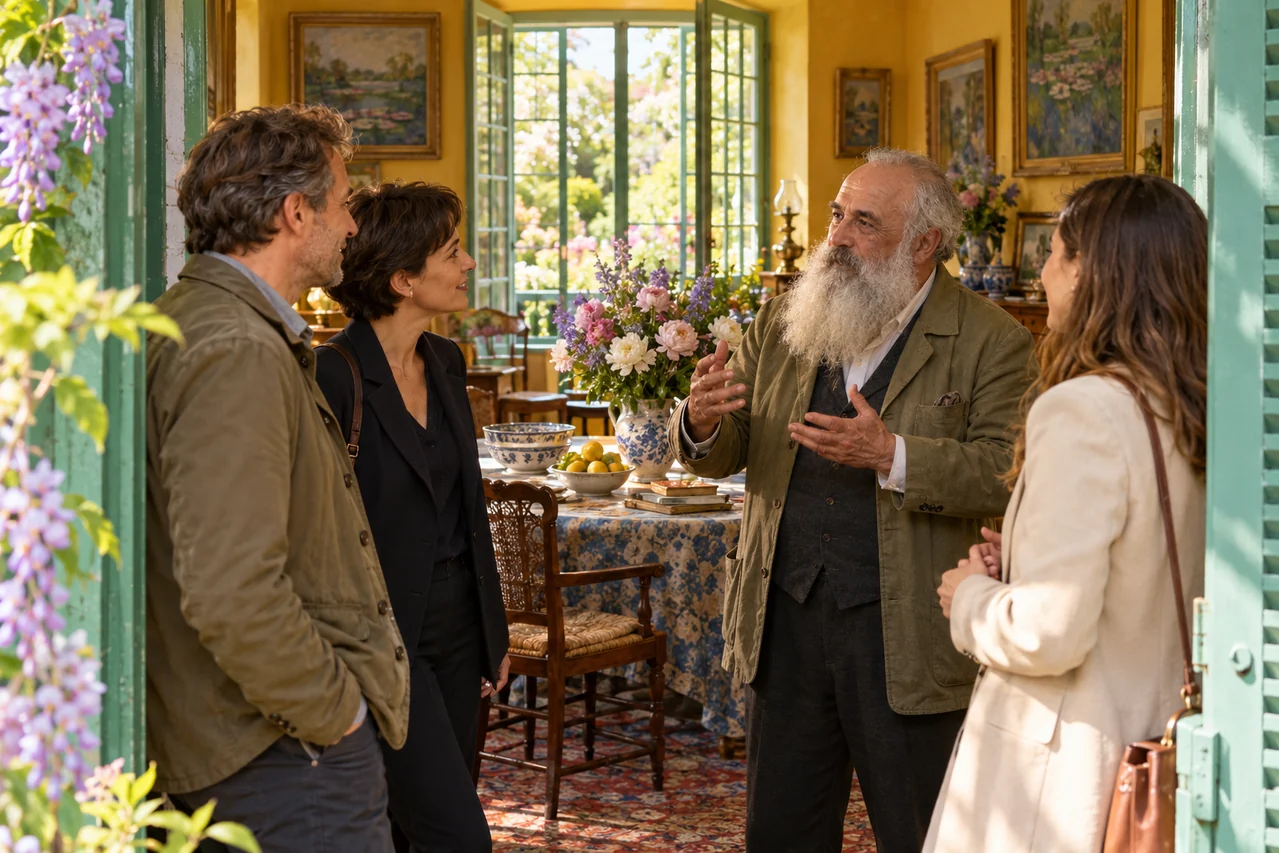
A house is not merely a passage to the garden
The gardens command attention, but moving too quickly through the house can remove an important part of the story. Rooms, domestic functions and collections give a scale to the life lived at Giverny. Visitors can consider how an artist worked within a household rather than imagine him permanently alone before a motif. The home offers different cultural evidence from the garden: it reveals preferences, relationships and the organization of daily surroundings as well as a famous artistic address.
Interior color invites another kind of observation
The distinctive colors of the dining room and kitchen can make guests look at relationships between surfaces in a space intended for living. Those choices need not be explained as coded versions of the paintings. They show an inhabited visual world, with color contributing to mood and identity. A visitor interested mainly in art can still gain something from this domestic setting: the painter's environment extended beyond canvases and included rooms in which meals, conversation and ordinary activities took place.
The Japanese prints widen the cultural frame
Monet's collection of Japanese prints provides a concrete point of entry into his interest in Japanese art. It also helps place the familiar bridge within a broader visual world rather than treating it as an isolated design feature. A careful account can consider framing, circulation of images and artistic curiosity without suggesting that Monet simply copied another tradition. The house reveals a collector as well as a maker, someone whose looking was nourished by works created elsewhere.
Family life complicates the solitary-master image
Alice Hoschedé and the extended household belong within the history of Giverny. Their presence makes the place more than the residence of one famous man. The practical and emotional circumstances of a family shaped daily life alongside painting. This does not require turning the house into a comprehensive family biography. It means giving visitors enough context to see that a celebrated artistic domain was also a living environment, with relationships and responsibilities that did not disappear behind the artist's reputation.
Blanche's role opens another artistic perspective
Blanche Hoschedé-Monet offers a way to consider both family and artistic activity within the setting. Including her helps challenge a narrative in which everyone around the master exists only to support his genius. A wider art journey can give women’s work appropriate attention without making every life identical to Monet's. The house is especially useful for this shift because it brings the visitor close to a shared environment, rather than isolating the painter within the public image of his finished work.
Work and maintenance sustained the domain
The house and gardens depended on people who organized, cooked, cared and maintained. Those activities are part of the material conditions that made the artistic environment possible. Acknowledging them makes the story more credible and more human. The famous garden was not outside ordinary labor. The visitor can appreciate Monet's creative decisions while recognizing that a property of this kind required sustained practical work, connecting artistic achievement with the daily infrastructure around it.
Compare homes without turning them into verdicts
The contrast with Van Gogh's accommodation at the Auberge Ravoux can be revealing: different circumstances, durations and public fortunes surround two major artists. It should not become a simplistic explanation of why their paintings look different or whose life was more authentic. Each home offers a particular historical perspective. The comparison works when the advisor uses it to discuss conditions and relationships, while retaining the artistic complexity that cannot be derived from the size or comfort of a room.
Let the house and garden answer different questions
The composition of Monet's gardens explains one dimension of Giverny, while the house reveals a domestic and collecting world. Inside Claude Monet’s Giverny can connect them through conversation with an embodied painter. A balanced day allows both subjects their own attention, with access and other practical arrangements checked separately. The visitor leaves with a fuller sense of the place: a working landscape and a lived home, related closely but not interchangeable in the story they tell.
FOR YOUR GUEST ITINERARIES
For guests curious about Monet as a person as well as a painter, Elyrea can help connect the house, garden and Encounter within a balanced Giverny itinerary.
Discuss your itinerary