
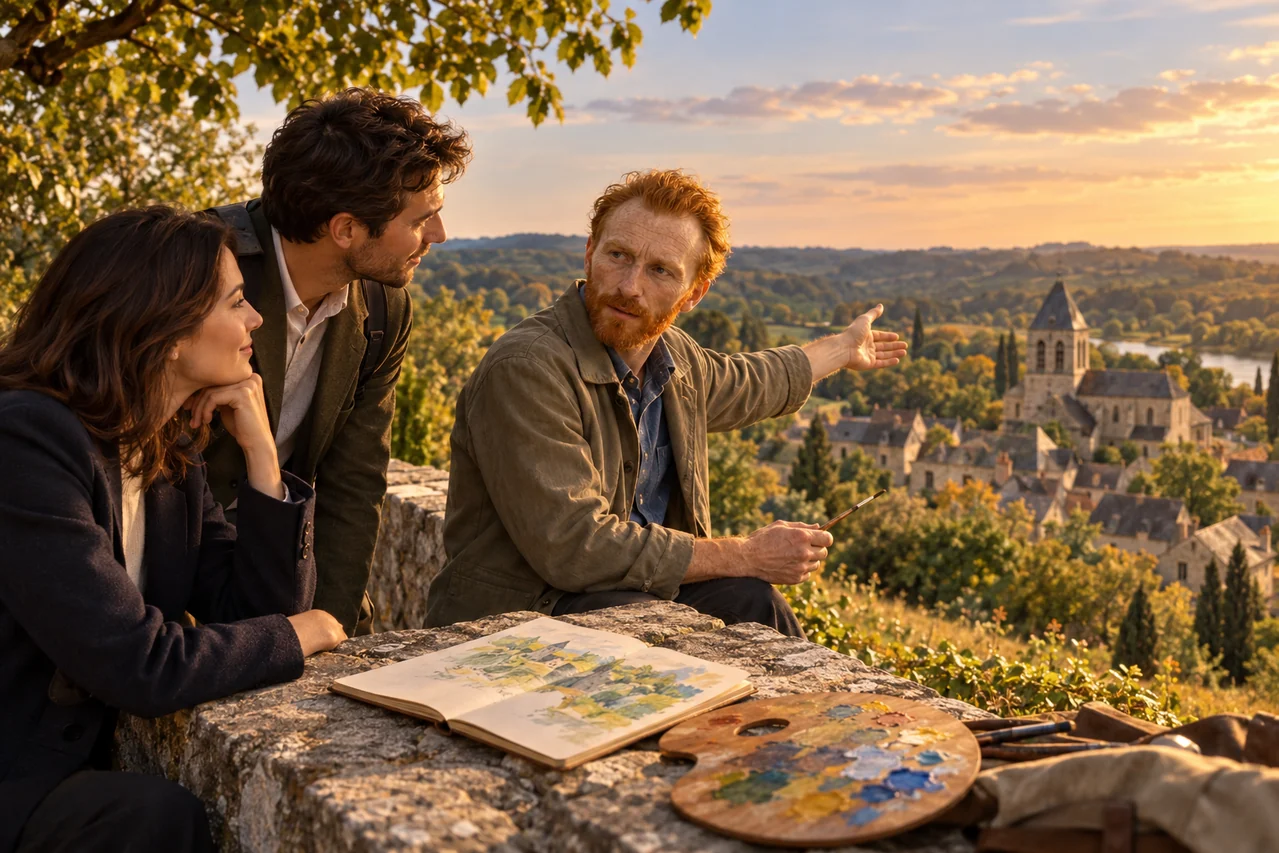
Begin with the conditions of making art in Paris
Montmartre can introduce materials, social relationships and the difficulties faced by artists before international recognition. That starting point gives a journey more substance than a sequence of famous biographies. A visitor can consider who supplied paint, who offered encouragement and how new ideas circulated. Paris becomes the environment in which artistic work found resources and audiences, not merely a backdrop of picturesque addresses later associated with celebrated names.
Père Tanguy makes the network human
Julien Tanguy's place among artists connects the practical world of supplies with friendship and support. His story offers a useful embodied opening because it asks what helps an artistic movement become possible. The Montmartre Encounter through Père Tanguy can establish that perspective. It should preserve distinctions among the artists in the broader network: Van Gogh was not an Impressionist, and a shared place or contact does not mean every painter belonged to the same movement.
A museum can provide the visual framework
A Paris museum visit can help travelers encounter works before visiting their subjects or the places where artists lived. Its role is to make comparisons possible, not to fill every available hour with art history. Advisors can select works according to the journey's questions, including the contributions of women such as Morisot when relevant. The later excursions then have a visual basis, while leaving room for the material environment and human stories that a museum cannot provide in the same way.
Auvers concentrates an intense period of work
Vincent's short stay in 1890 offers a powerful second chapter. The village was already there; he chose subjects within it and transformed them through painting. Home, church, fields and Gachet's connections make the setting legible. The journey should not reduce this chapter to death or mental illness. Visitors can see an experienced artist actively working, while the final events and family remembrance receive careful treatment in their appropriate place within the fuller account.
Giverny introduces a different relationship with time
Monet settled at Giverny in 1883 and remained until 1926. Over those decades, the garden developed through sustained decisions, labor and observation. This contrasts with Vincent's brief stay without implying that duration determines artistic achievement. Monet partly constructed the environment he painted, while Vincent worked within a village and landscape he had not designed. Monet's gardens as a created landscape develops that distinction through color, planting, water and changing conditions of perception.
Compare without creating an artificial rivalry
The journey need not decide which artist was more moving, more modern or more important. The differences are the subject. Vincent's treatment of line and color and Monet's sustained attention to light and reflection offer different ways of transforming a place into painting. Nor should the account invent a close personal relationship between the two to strengthen the itinerary. Artistic connections can be made through works, periods and questions without requiring a fabricated encounter between historical individuals.
Give each destination its own space
A progression across several days can let Paris introduce networks, Auvers focus on Vincent and Giverny explore Monet's garden-world. The precise order can change with the guest's interests and practical arrangements. What matters is avoiding a dense collection of sites in which each receives only recognition. Families may need visual questions and pauses; collectors may want discussion of reception and reputation. The same overall narrative can support these differences when time is allocated to depth rather than quantity.
Return to the works with a changed understanding
A later encounter with the Water Lilies or a Van Gogh painting can become the journey's continuation rather than an additional obligation. Guests now recognize the physical places and some of the relationships around the work. Elyrea's character-led Encounters add interaction to those connections, while museums and independently arranged visits supply other forms of evidence. The artistic trip becomes a story of how people inhabit, observe and transform environments, with each destination contributing a distinct and necessary perspective.
FOR YOUR GUEST ITINERARIES
For guests seeking a coherent art journey beyond individual museum visits, Elyrea can help connect Père Tanguy, Van Gogh and Monet Encounters across their French itinerary.
Discuss your itinerary